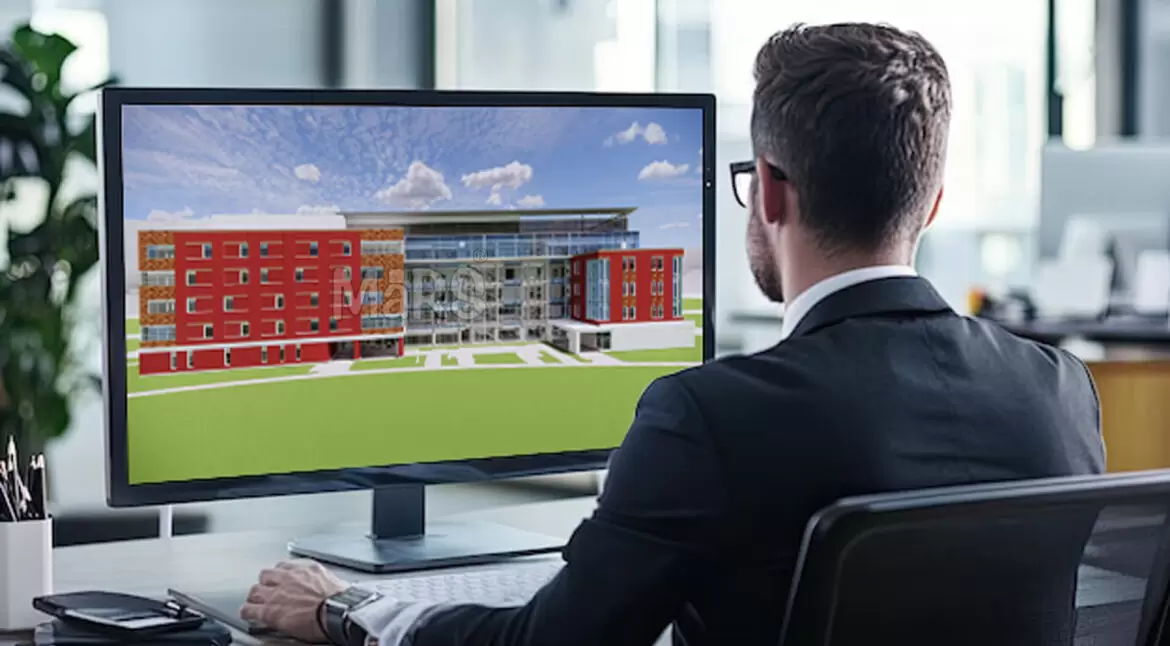
Point Cloud to BIM services transform the way construction professionals create building models. These services convert real-world measurements into precise, intelligent digital representations of structures. Using 3D scanning technologies such as laser scanners and photogrammetry, teams capture millions of spatial points that define every surface, component, and structural element. Walls, floors, ceilings, doors, and mechanical systems are recorded with exact dimensions, resulting in a highly accurate digital representation of the building. This level of detail provides a solid foundation for creating BIM models that reflect the building’s true conditions, reducing errors and discrepancies during design and construction.
Construction teams utilize Scan to BIM Services to enhance collaboration, planning, and informed decision-making. Architects, engineers, and contractors can detect clashes, verify as-built conditions, and plan renovations without relying on outdated drawings or manual measurements. These models also support facility management by providing a digital reference for maintenance and future upgrades. By transforming complex point cloud data into actionable BIM models, professionals save time, reduce rework, and enhance project accuracy. This technology enables teams to manage every stage of a project with confidence, turning raw building data into intelligent models that guide design, construction, and long-term building operations.
What Is the Role of Point Cloud in Modern Construction?
Scan to BIM Services captures precise 3D data of buildings, giving construction teams a reliable digital representation of existing structures. These services remove the need for outdated drawings and manual measurements, allowing architects, engineers, and contractors to work directly with accurate spatial information. Point clouds record millions of data points that define every surface and structural element, providing the foundation for intelligent BIM models and informed design decisions.
Key roles of point clouds in modern construction include
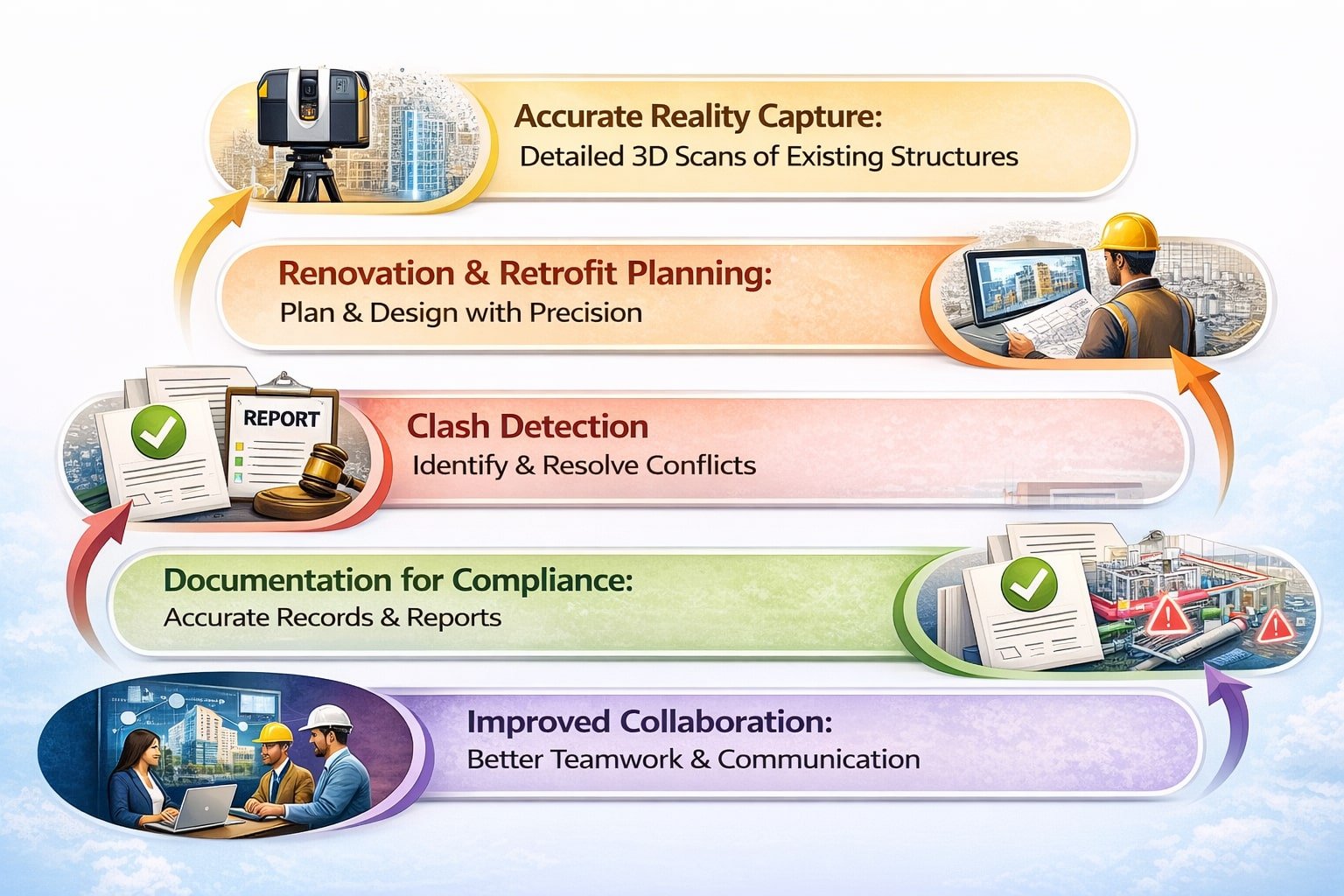
Construction teams apply point cloud data throughout the project lifecycle to reduce errors, save time, and make informed decisions. By converting real-world measurements into actionable BIM models, Scan to BIM Services bridge the gap between physical structures and digital design, enabling professionals to plan, design, and execute projects with greater accuracy and efficiency.
How Does BIM Transform Building Designs?
BIM enables designers to visualize complex building systems in three dimensions, allowing for better planning and decision-making during the design phase. It helps architects and engineers simulate different scenarios, optimize layouts, and evaluate material use, energy performance, and structural efficiency. BIM reduces miscommunication between teams and accelerates the approval process for design changes.
BIM also supports iterative design improvements by linking models with project schedules, budgets, and performance data. Stakeholders can track progress, manage resources, and assess design impact in real time. This capability turns building models into actionable tools, allowing teams to refine designs proactively, reduce delays, and maintain project quality from concept to construction.
How do Point Cloud to BIM Services Help Building Models?
Point Cloud to BIM services translate detailed 3D scans into structured, intelligent models that reflect the exact as-built conditions of a building. By converting raw point cloud data into BIM objects, teams gain a precise digital twin of every structural and architectural element. This approach allows project stakeholders to analyze complex geometries, verify existing conditions, and plan interventions for renovation or expansion projects with minimal guesswork. It also facilitates coordination among architects, engineers, and contractors by providing a shared, accurate model that guides design and construction decisions.
Key Steps in the Process
Benefits of Building Models
Where Can Point Cloud to BIM Be Applied in a Project?
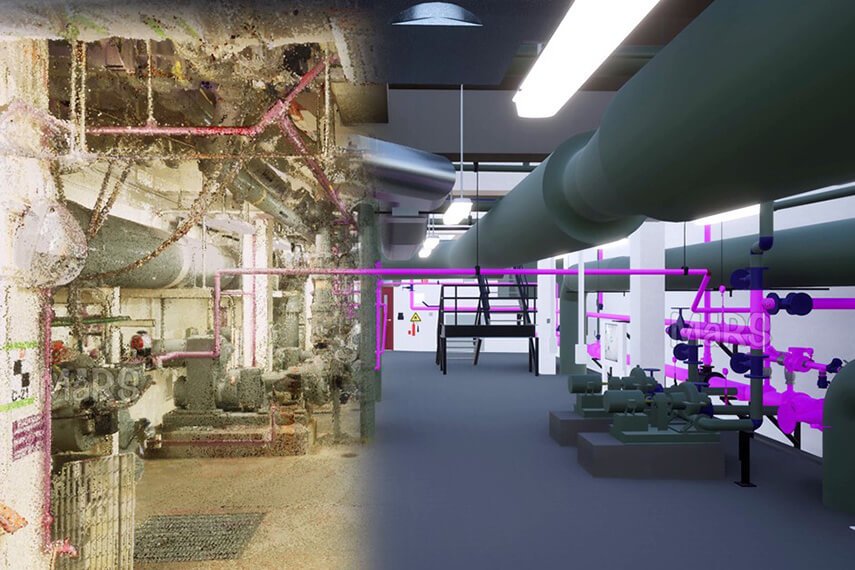
Construction teams use 3D Laser scanning to BIM services to capture the as-built conditions of complex structures, making it easier to integrate new designs with existing buildings. During renovation or retrofit projects, designers can precisely map structural elements, HVAC systems, electrical layouts, and plumbing networks. This allows engineers to evaluate potential interferences, plan structural reinforcements, and adjust designs without halting ongoing operations. Historical buildings benefit particularly, as point cloud data preserves original dimensions and details, enabling accurate restorations while respecting architectural integrity.
Point Cloud enables an accurate representation of existing structures during the construction phase. Contractors use it to coordinate multi-trade operations, detect clashes between mechanical, electrical, and plumbing systems, and validate construction progress against the model. Facility managers leverage the models for predictive maintenance, space optimization, and long-term asset management. By applying Revit scan to BIM strategically, projects gain precision, reduce rework, and improve operational planning across the entire building lifecycle.
What Challenges Should Be Considered During Conversion?
Why Should Projects Adopt Point Cloud to BIM?
3D LiDAR Scan to BIM captures the exact dimensions and conditions of existing structures, including hidden elements and complex geometries often missed by traditional methods. It reduces manual measurements, minimizes costly rework, and speeds up renovation, retrofit, and clash-detection processes. Integrating scanned data into parametric BIM models allows teams to visualize design modifications, optimize space use, and preserve historical details. This approach supports data-driven decisions, improves project coordination, and provides a reliable foundation for future updates, maintenance planning, and long-term asset management.
Conclusion
Scan to BIM services offer a highly detailed bridge between physical structures and digital models, capturing complex geometries, hidden elements, and real-world conditions that traditional methods often miss. These services convert detailed point cloud data into parametric BIM models, reducing errors, shortening project timelines, and supporting informed decisions during design, renovation, and facility management. Point cloud to BIM services create intelligent, data-driven building models that enable accurate construction, efficient maintenance, and future-ready planning throughout the building’s lifecycle.