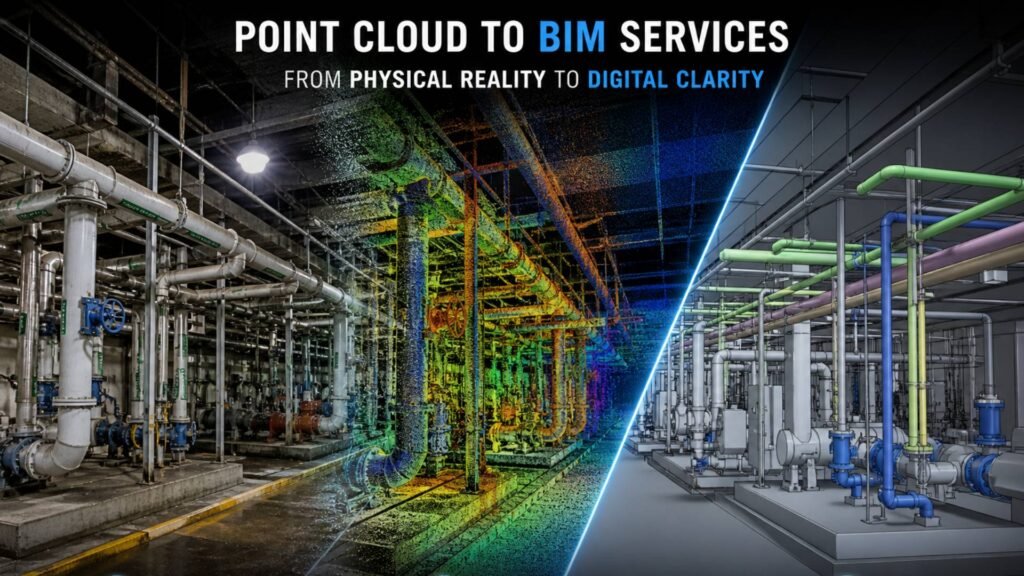
Point Cloud to BIM Services are not just about converting scan data into 3D models—they represent a shift in how the construction and design industry understands existing structures. Every building, whether newly constructed or decades old, contains layers of complexity that are often hidden behind outdated drawings or incomplete documentation. This is where Point Cloud to BIM becomes essential, transforming real-world conditions into a clear, structured, and intelligent digital format.
By bridging the gap between physical reality and digital workflows, these services enable stakeholders to work with confidence, accuracy, and deeper insight throughout the project lifecycle.
From Reality Capture to Meaningful Digital Environments
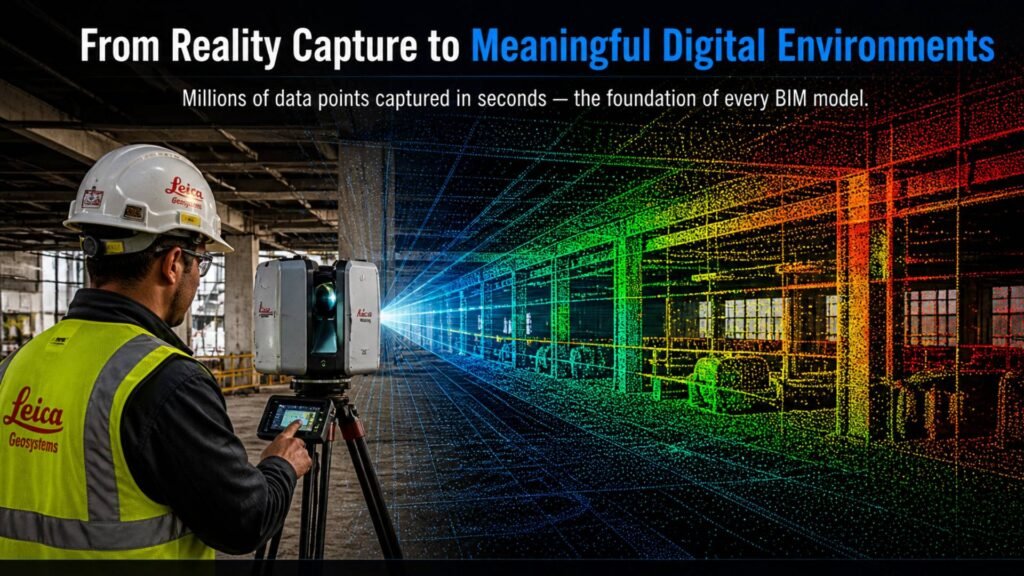
At the core of this service lies reality capture technology. Using advanced 3D laser scanners, millions of data points are collected from a site. These points form what is known as a point cloud—a dense and highly accurate representation of surfaces, shapes, and spatial relationships.
However, raw point cloud data on its own is complex and difficult to interpret. The true transformation begins when this data is processed and modeled into a BIM environment using tools like Autodesk Revit.
During this stage, skilled professionals analyze the scan data and convert it into structured elements such as walls, columns, beams, floors, ceilings, and MEP systems. Each component is carefully modeled to reflect actual site conditions. The result is not just a 3D model, but a data-rich digital replica that provides both visual clarity and technical accuracy.
Bringing Hidden Conditions into Focus
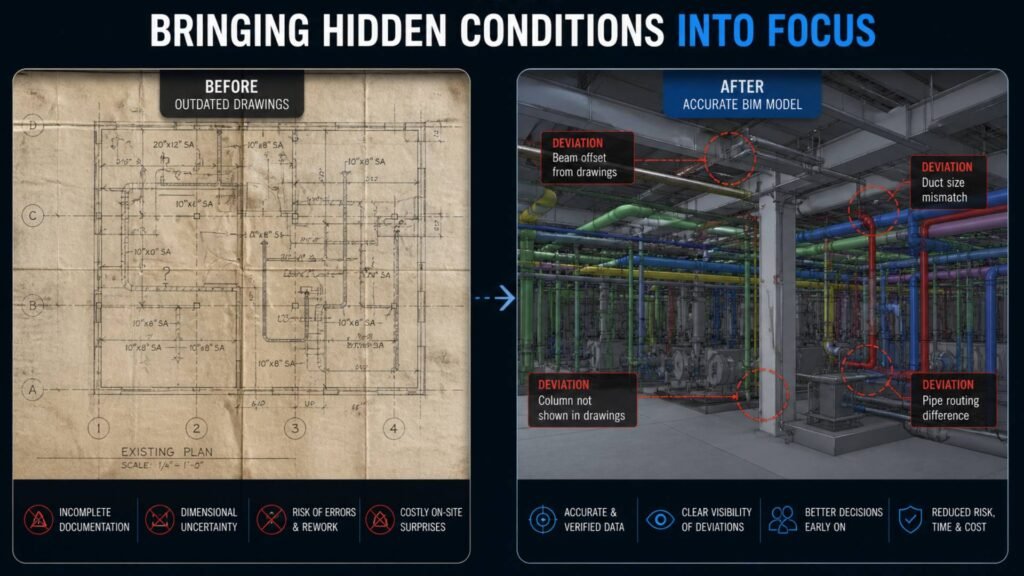
One of the biggest challenges in working with existing buildings is uncertainty. Traditional drawings may not reflect on-site changes, and manual measurements often miss critical details. These gaps can lead to design conflicts, costly rework, and project delays.
Point Cloud to BIM eliminates these issues by capturing the structure exactly as it exists. Every deviation, alignment, and irregularity is recorded and translated into the model. This allows teams to move forward with complete confidence in their data.
Instead of relying on assumptions, architects and engineers can base their decisions on verified information. This clarity becomes especially valuable in renovation, retrofit, and expansion projects where precision is critical.
Empowering Design with Real-World Accuracy
Design decisions are only as strong as the data supporting them. When teams work with inaccurate or incomplete inputs, even the best designs can fail during execution.
With Point Cloud to BIM, design teams gain access to:
- Exact dimensions and spatial relationships
- Accurate positioning of structural and MEP elements
- Real-world constraints that impact design feasibility
This enables architects and engineers to create designs that are not only innovative but also practical and buildable. It reduces the need for revisions and ensures smoother coordination between disciplines.
In complex projects, this level of accuracy can significantly improve efficiency, helping teams avoid delays and stay within budget.
Enhancing Coordination Across Project Teams
Modern construction projects involve multiple stakeholders, including architects, engineers, contractors, and facility managers. Miscommunication or data inconsistencies between these teams can lead to major challenges.
A BIM model generated from point cloud data acts as a single source of truth. Everyone works from the same accurate model, ensuring alignment across all stages of the project.
This shared environment improves collaboration by:
- Reducing misunderstandings between teams
- Enabling early clash detection
- Streamlining communication and approvals
As a result, projects move forward more smoothly, with fewer disruptions and better overall coordination.
Turning Models into Long-Term Digital Assets
The value of Point Cloud to BIM extends far beyond design and construction. Once created, the BIM model becomes a long-term asset that continues to deliver value throughout the building’s lifecycle.
Facility managers and owners can use this model for:
- Space planning and optimization
- Maintenance and asset tracking
- Renovation and future upgrades
Instead of starting from scratch for every new project phase, stakeholders can rely on an accurate and up-to-date digital foundation.
This approach not only saves time but also supports better decision-making in the long run.
Simplifying Complex Structures and Large Datasets
Point cloud data can be extremely large and detailed, often consisting of billions of data points. Managing this level of complexity requires both technical expertise and advanced tools.
Point Cloud to BIM simplifies this complexity by organizing raw data into a structured and user-friendly model. Instead of navigating through dense scan files, users interact with a clean and intuitive 3D environment.
This makes it easier to:
- Visualize complex geometries
- Extract accurate measurements
- Analyze structural and MEP systems
Even highly detailed and intricate projects become more manageable when presented in this format.
Supporting a Wide Range of Industry Applications
Point Cloud to BIM Services are widely used across multiple sectors due to their versatility and accuracy. Some of the key applications include:
- Renovation and Retrofit Projects– Creating precise as-built models for redesign
- Heritage and Historical Preservation– Digitally documenting complex architectural details
- Commercial and Industrial Facilities– Managing large-scale structures with accuracy
- Infrastructure Projects– Supporting bridges, airports, and transportation systems
- Facility Management– Enhancing operational efficiency through accurate data
This adaptability makes Point Cloud to BIM a valuable solution for both small-scale and large-scale projects.
Driving Digital Transformation in Construction
The construction industry is rapidly evolving toward digitalization, and accurate data is at the center of this transformation. Point Cloud to BIM plays a key role in this shift by connecting physical environments with digital tools and workflows.
It enables:
- Data-driven decision-making
- Integration with advanced technologies like AI and automation
- Improved project visualization and simulation
As digital adoption continues to grow, Point Cloud to BIM is becoming an essential component of modern construction practices.
A Strategic Advantage for Future-Ready Projects
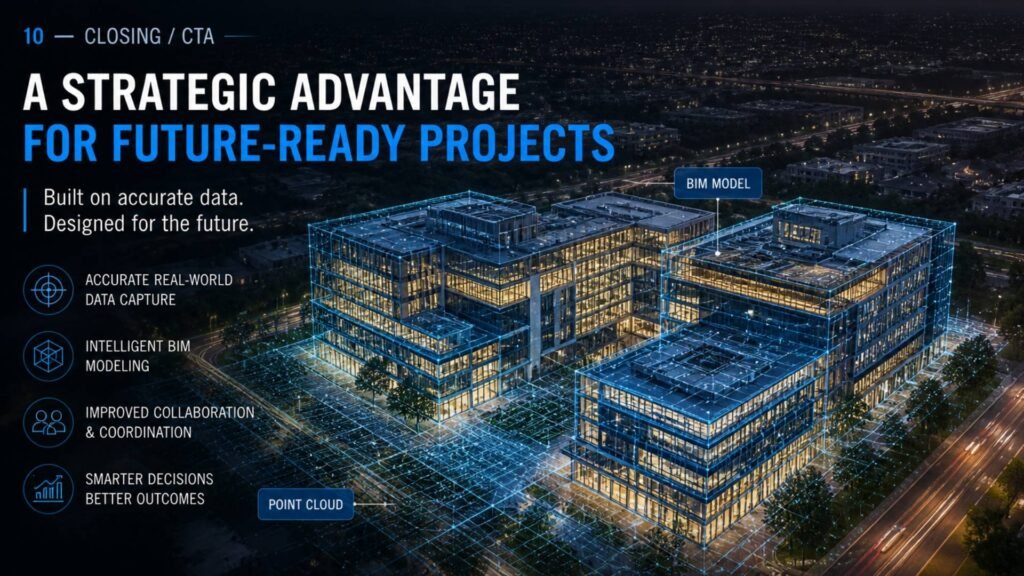
In an industry where precision, efficiency, and collaboration are critical, Point Cloud to BIM Services offer a clear advantage. They replace outdated methods with a smarter, more reliable approach to capturing and using building data.
By providing accurate models, improving coordination, and supporting long-term asset management, these services help organizations stay competitive and future-ready.
Conclusion
Point Cloud to BIM Services go beyond simple modeling—they redefine how buildings are understood and managed. By transforming raw scan data into intelligent digital assets, they bring clarity to complexity and confidence to decision-making.
From initial planning to long-term facility management, this approach ensures that every stage of a project is built on accurate, reliable information. In a world where construction is becoming increasingly complex, Point Cloud to BIM stands out as a powerful solution for delivering better, smarter, and more efficient outcomes.