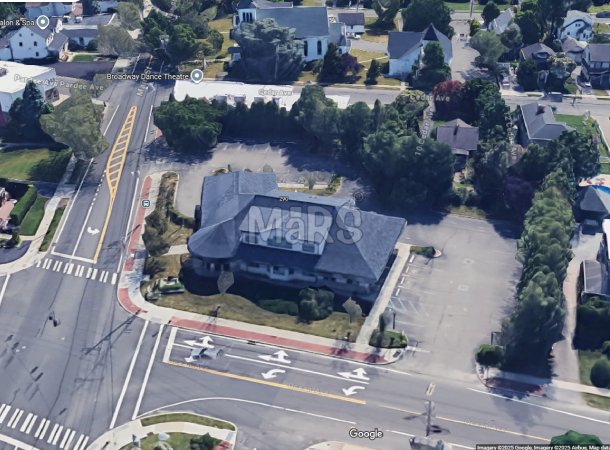
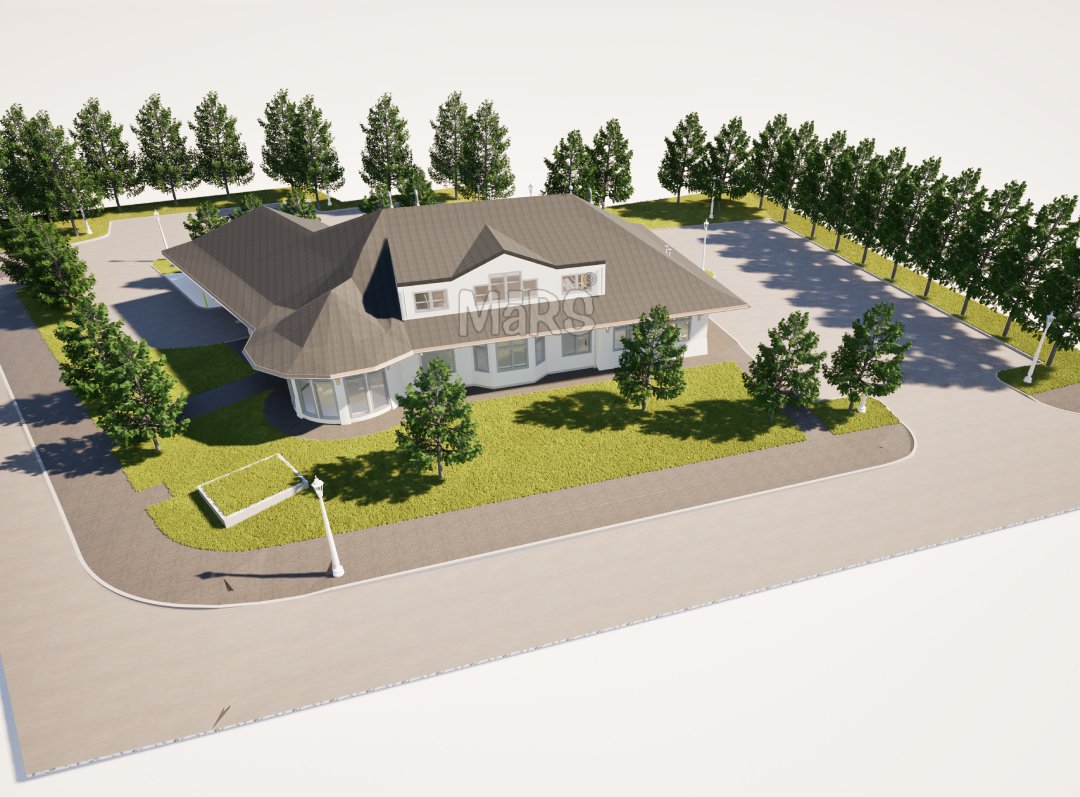
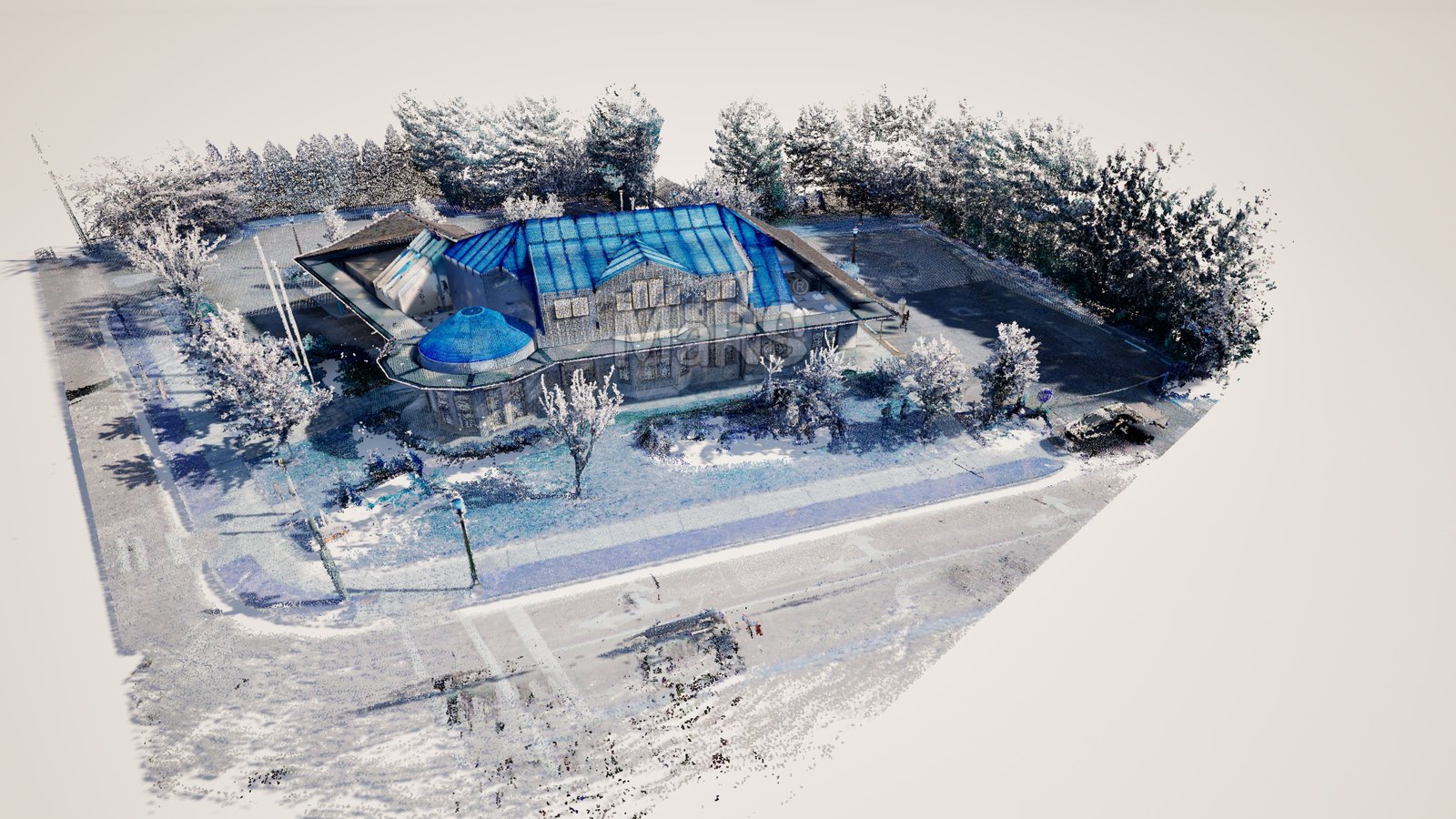
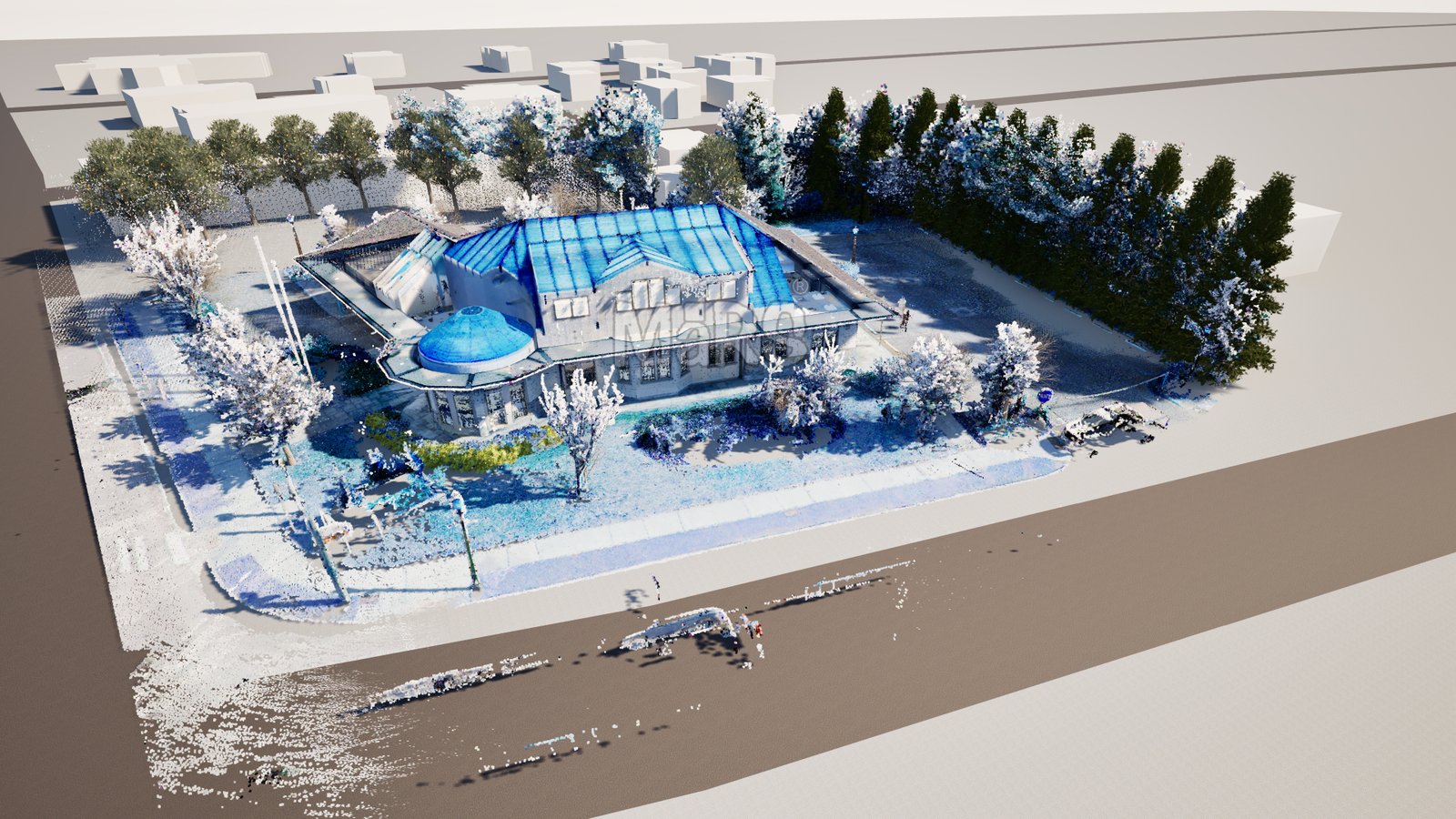
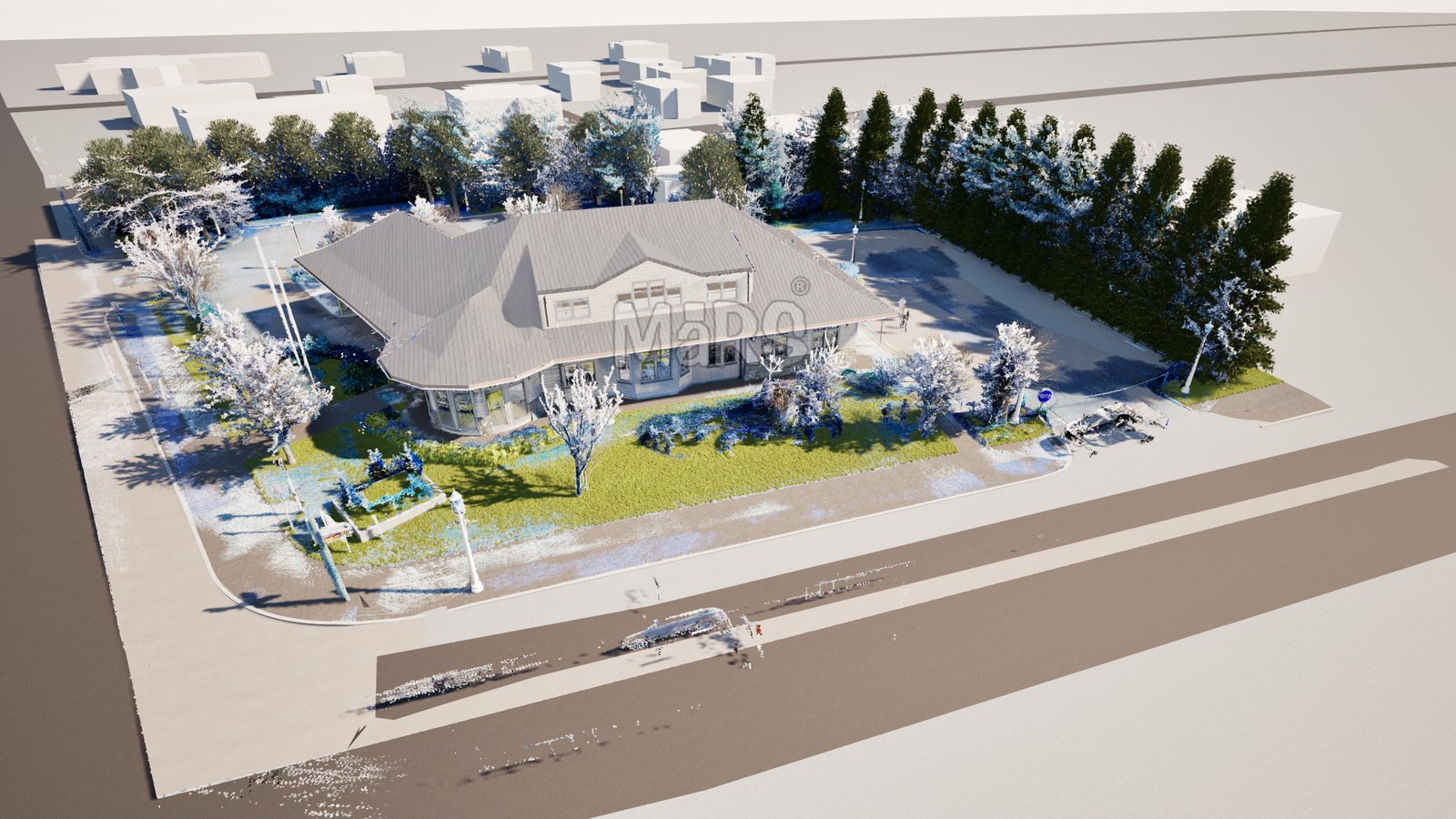
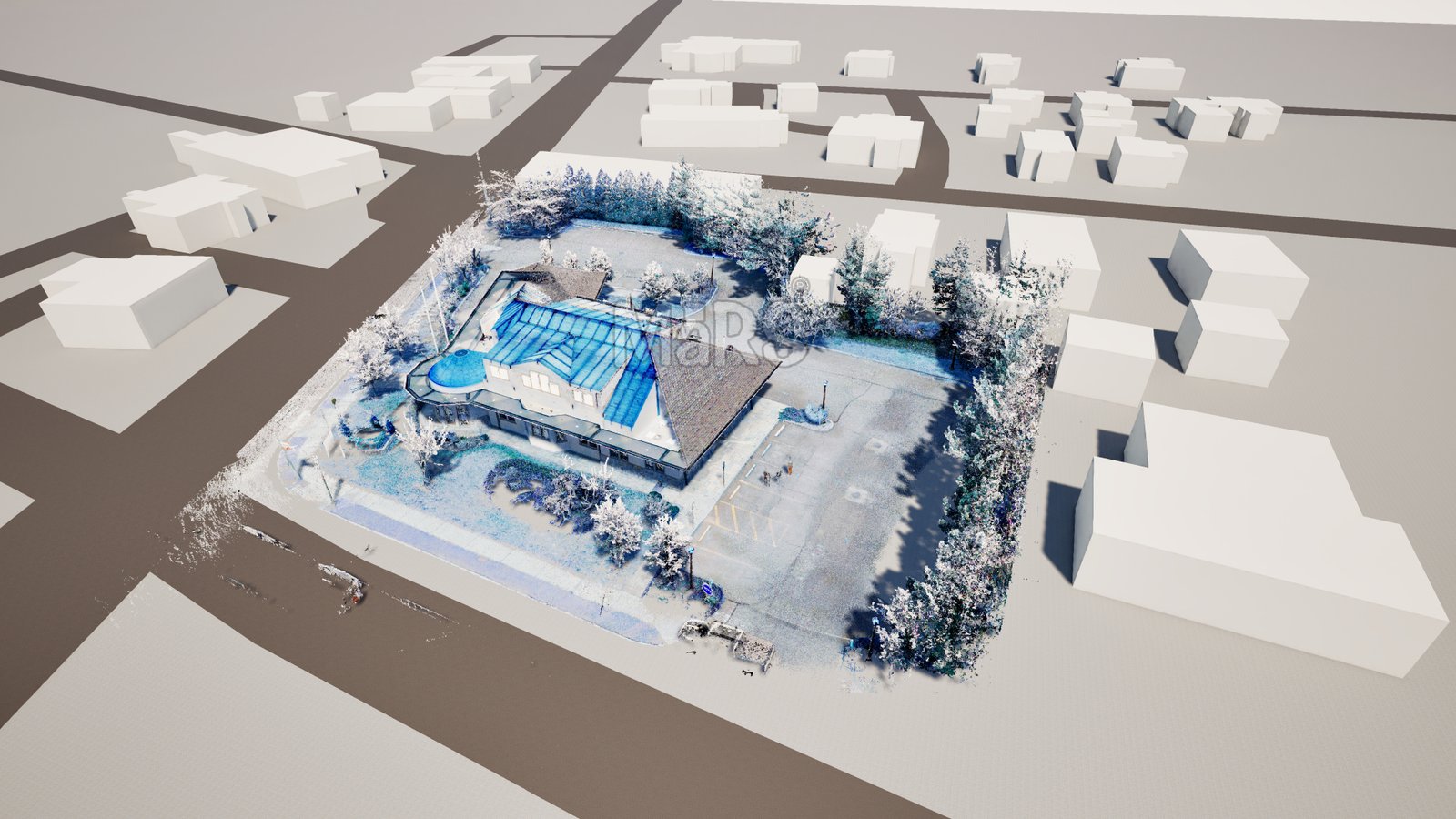
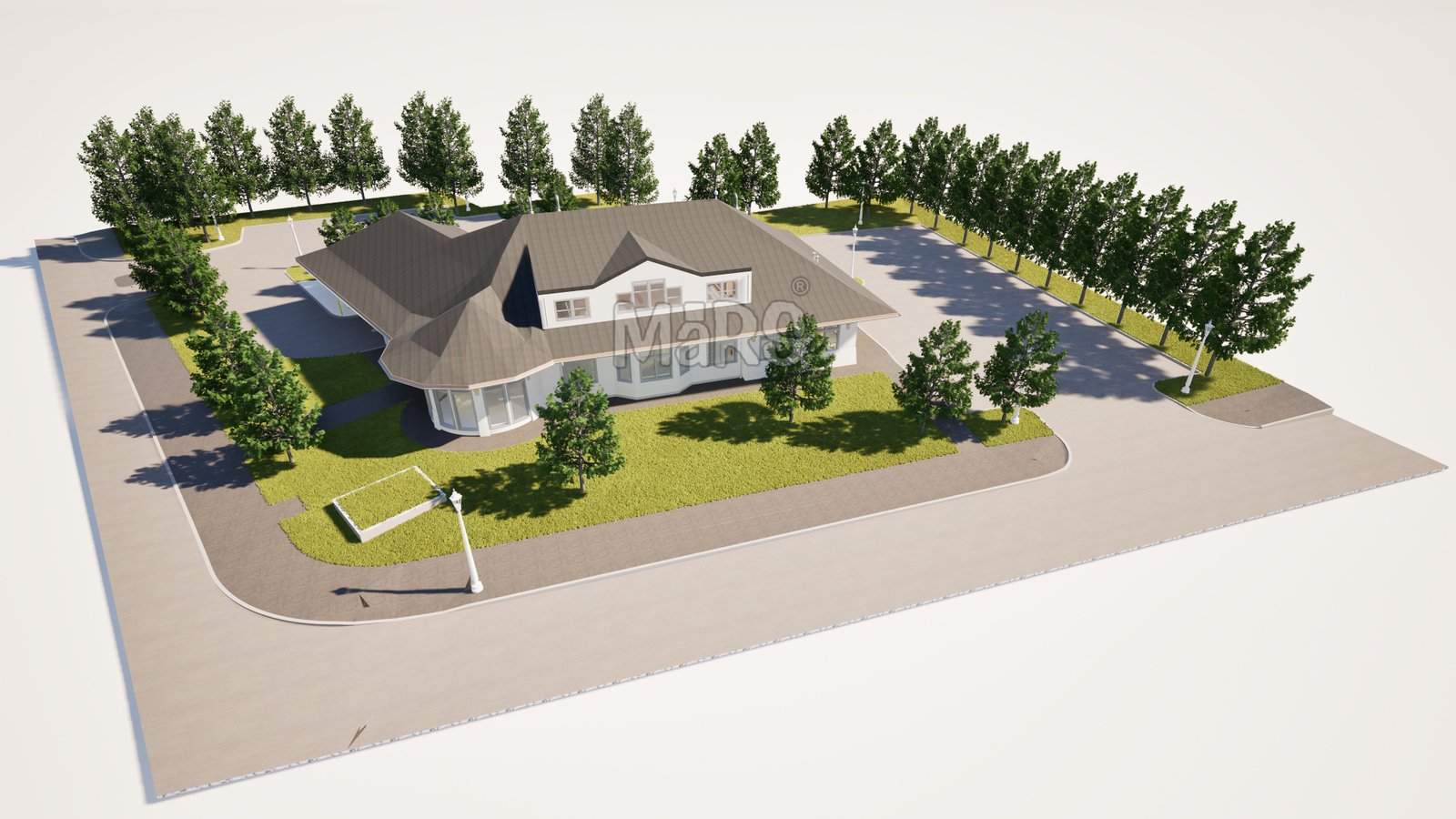
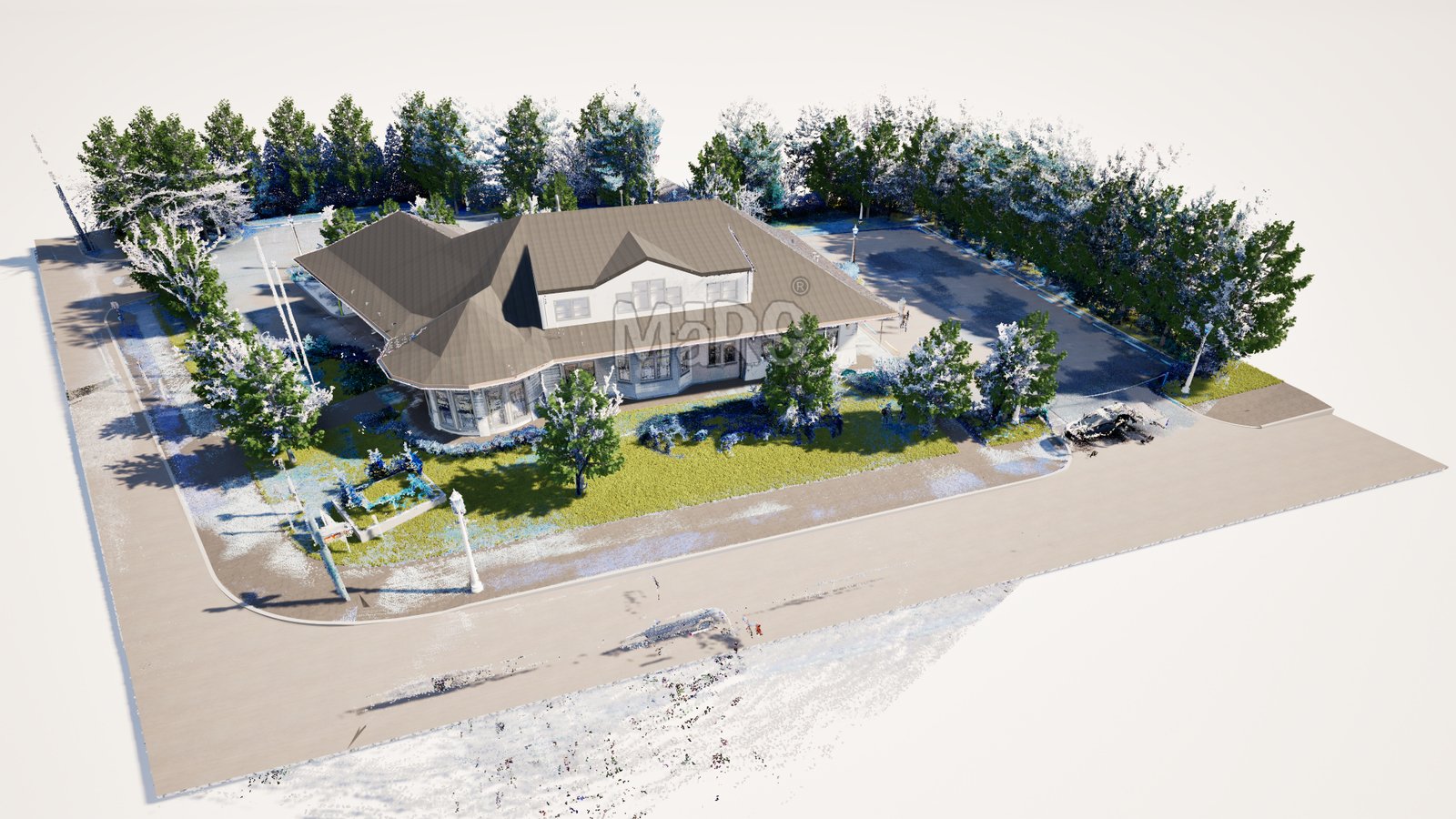
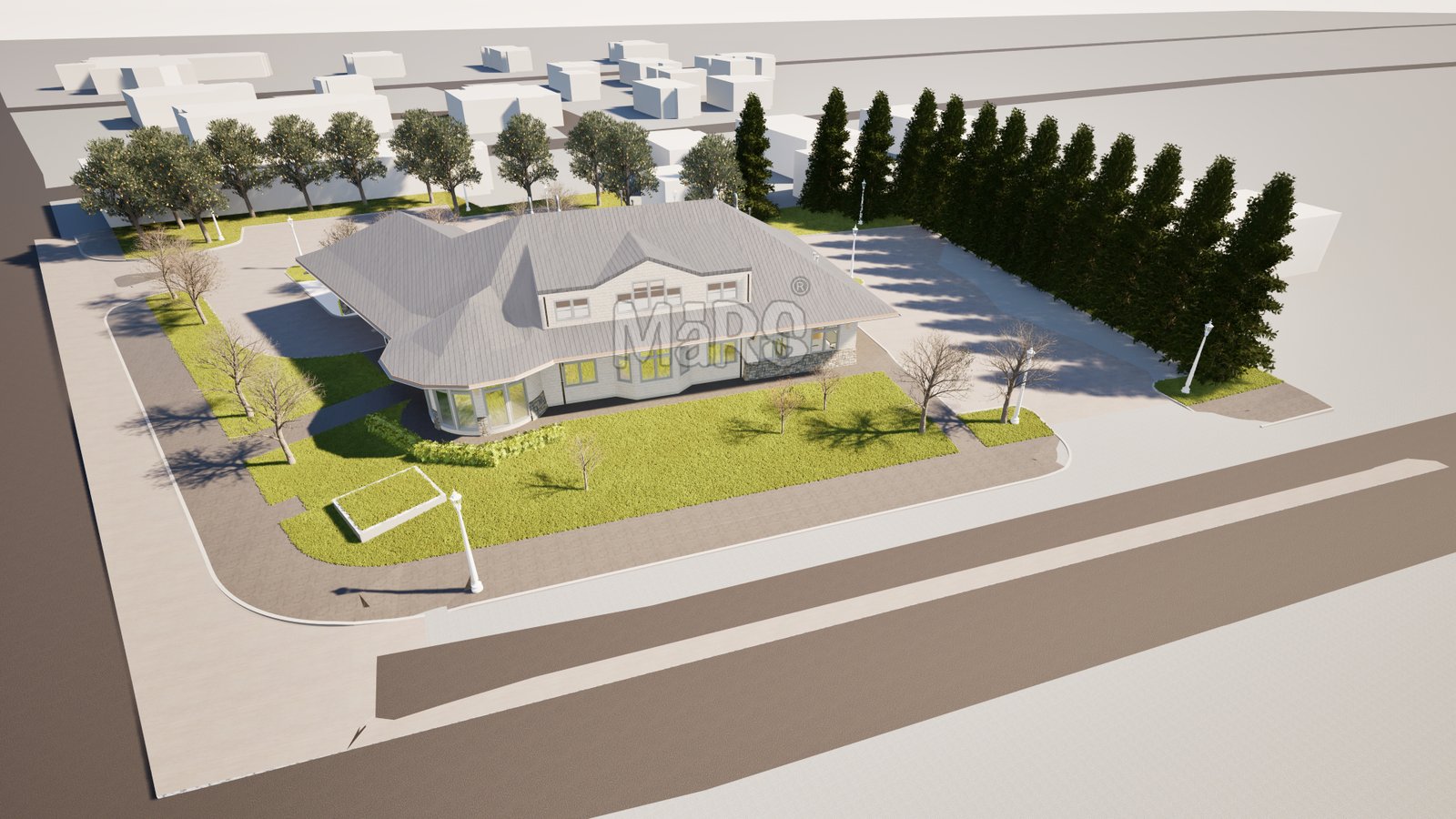
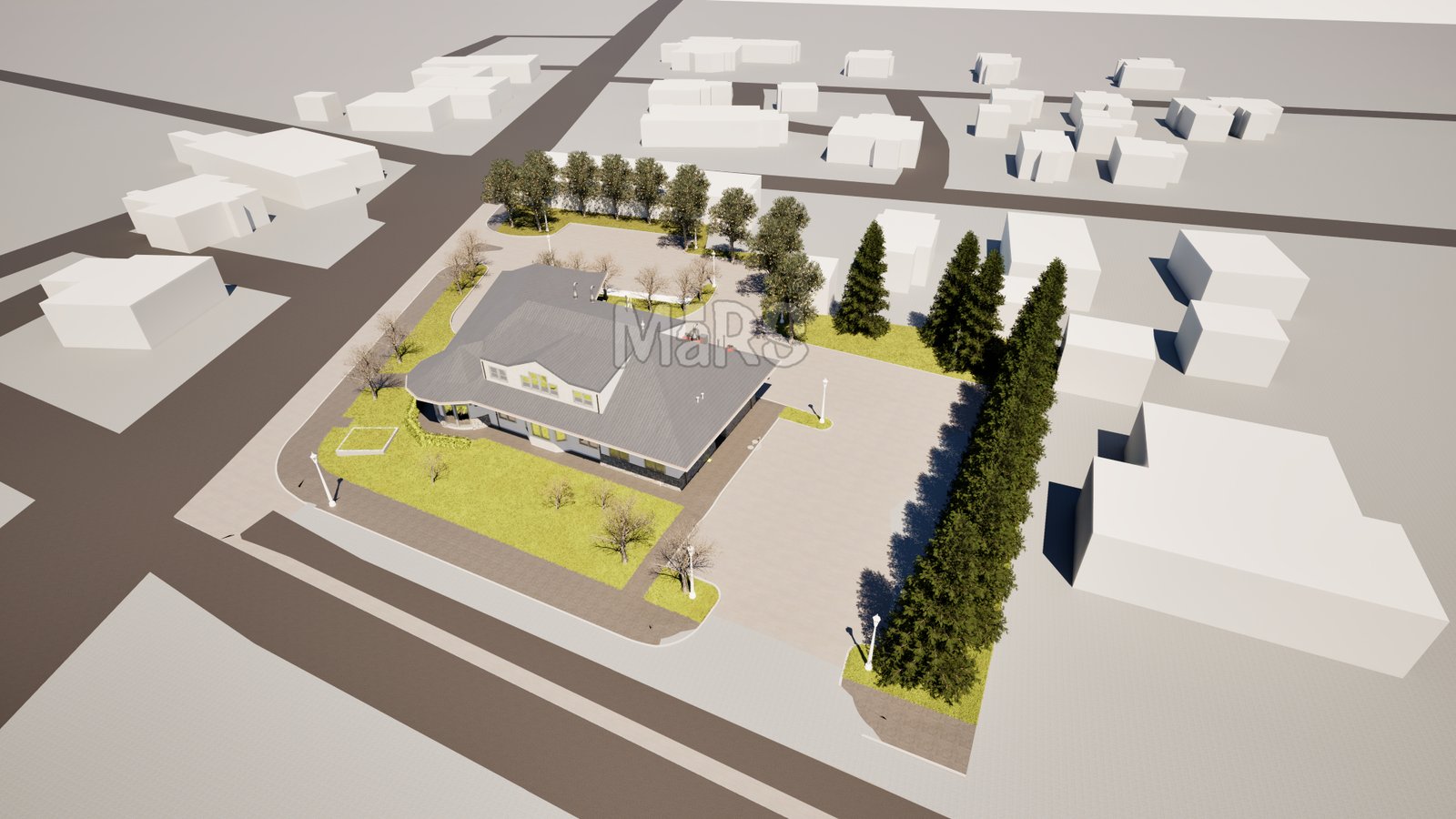
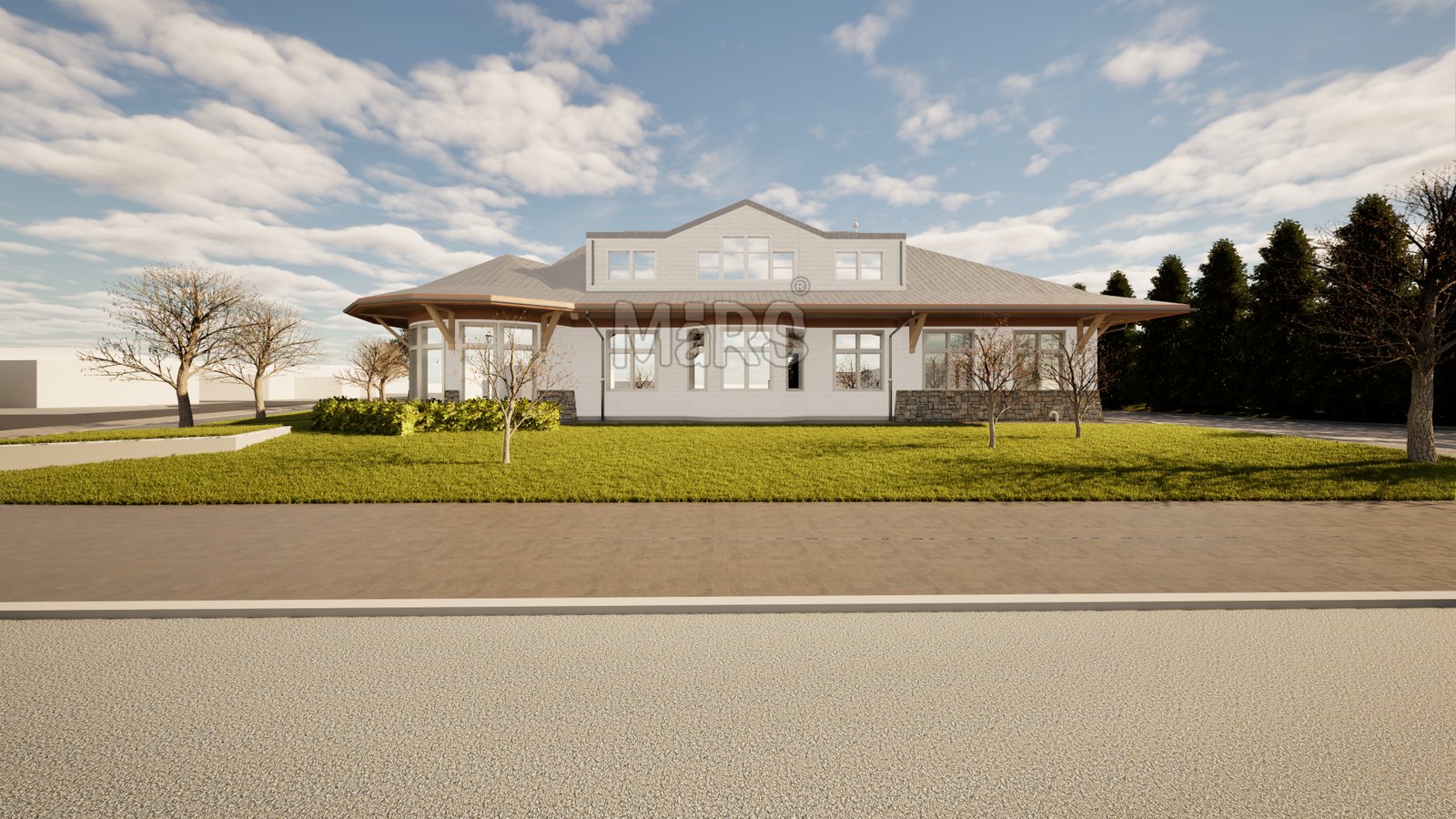
The 290 Islip project involved capturing the complete existing conditions of an operational facility to support upcoming renovation and design coordination work. Since no reliable as-built documentation existed for the building, an accurate, field-verified Building Information Model was required as the foundation for all downstream design, engineering, and construction decisions.
MaRS BIM Solutions delivered end-to-end Scan-to-BIM services for this project, beginning with detailed 3D laser scanning of the facility to record every existing condition on site. The captured data was processed into accurate, registered point cloud files, which were then imported into Revit to build a fully coordinated LOD 400 model covering architectural and MEP systems. Every element was modeled with correct real-world dimensions and alignments, giving the design team a model they could trust for measurements, clash resolution, and construction planning. The final model was coordinated across disciplines using Navisworks, resulting in a clash-free, construction-ready BIM deliverable.
Why This Project Needed BIM?
01
No Reliable As-Built Documentation
Existing drawings did not reflect current site conditions. A Scan-to-BIM approach was the only reliable way to capture true existing conditions before any renovation design could begin.
02
High-Accuracy Renovation Requirements
Renovation work demands precise dimensional accuracy to avoid field conflicts. Laser scanning and point cloud modeling ensured every wall, system, and structural element was captured to real-world accuracy.
03
LOD 400 Detail for Construction Readiness
A basic architectural shell was not sufficient for this scope. LOD 400 modeling of architectural and MEP elements gave the project team fabrication-level detail ready for construction planning.
04
Multi-System Coordination
With architectural and MEP elements occupying shared spatial zones, coordinated modeling was essential to identify conflicts between existing conditions and proposed design intent before work reached the field.
Scope of Work
Detailed 3D Laser Scanning of Existing Conditions
Point Cloud Processing and Registration
LOD 400 BIM Modeling in Revit (Architectural and MEP)
Dimensional and Alignment Verification Against Scan Data
Construction and Design-Ready BIM Deliverable
Multi-Discipline Clash Detection and Coordination in Navisworks
Visual Highlights
Scan
BIM
Key Challenges
Capturing Accurate Existing Conditions
The facility had no dependable as-built records, so every dimension, alignment, and system routing had to be verified directly from the laser scan data rather than assumed from outdated drawings.
Point Cloud to Model Accuracy
Translating dense, unstructured point cloud data into a clean, usable LOD 400 Revit model required careful processing to preserve real-world accuracy while keeping the model efficient to work with.
Architectural and MEP Alignment
With existing architectural elements and MEP systems occupying the same building zones, precise coordination was required to ensure the as-built model reflected true field conditions without conflicts.
Coordination Before Design Handover
Any inaccuracies in the as-built model would carry forward into renovation design. Clash detection and verification were critical steps before the model could be handed off for design and construction planning.
Our Project Execution Strategy
Comprehensive Field Scanning
The building was fully laser scanned to capture existing conditions in detail, ensuring no area of the facility was left undocumented before modeling began.
Accurate Point Cloud Processing
Scan data was processed and registered into clean, accurate point cloud files, forming a reliable foundation for all subsequent modeling work.
LOD 400 Modeling in Revit
Architectural and MEP elements were modeled directly against the point cloud, with dimensions and alignments verified at every step to match true existing conditions.
Navisworks Coordination and Clash Detection
The completed model was run through multi-discipline clash detection in Navisworks, resolving conflicts and confirming the model was fully coordinated before delivery.
Construction-Ready Handover
The final deliverable was a fully coordinated, LOD 400 BIM model ready to support renovation design and construction planning with confidence.
Get In Touch
Let’s Talk About Your Next Project
Share your drawings and project scope. We will review and send a proposal within 24 hours.