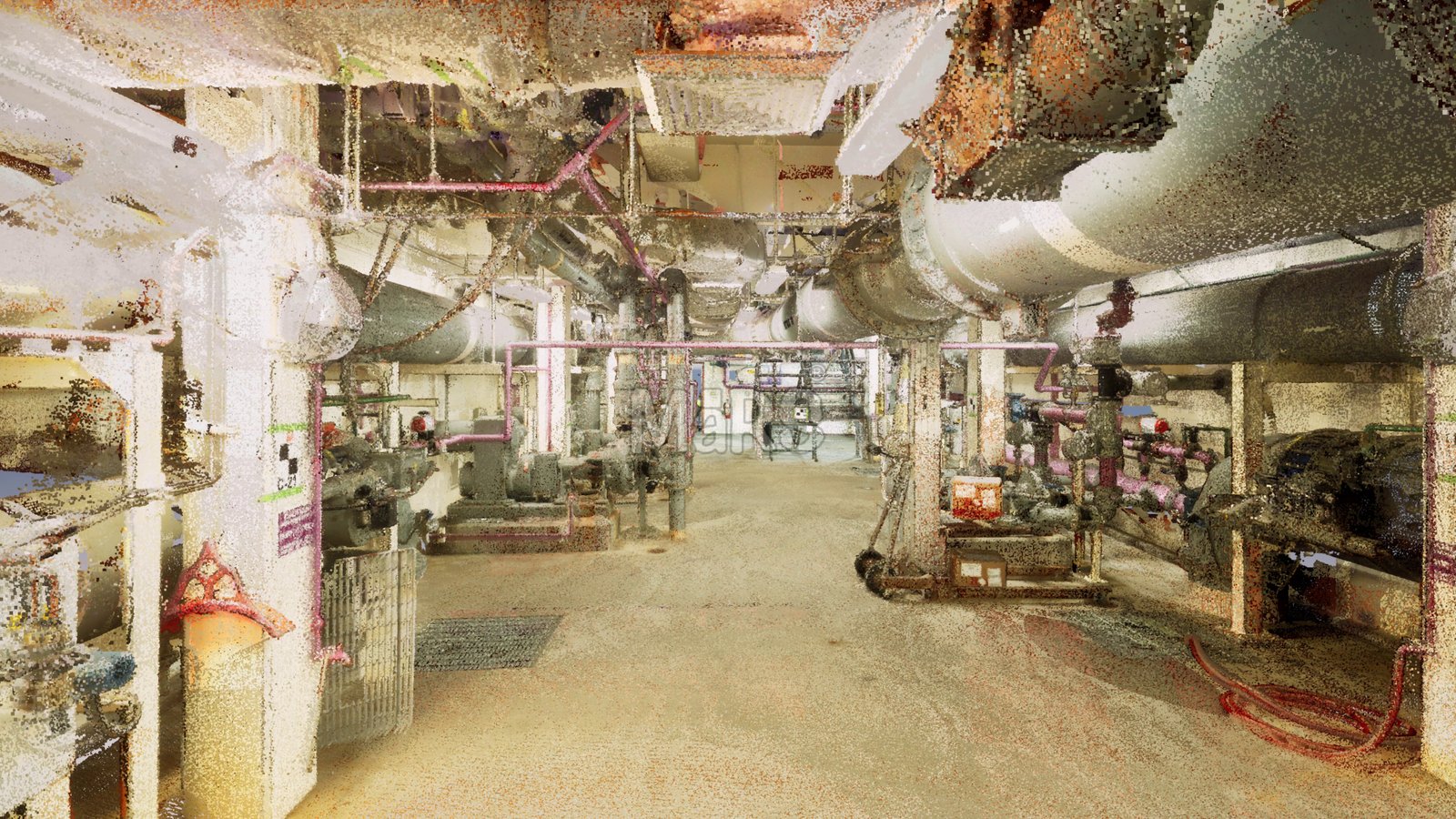
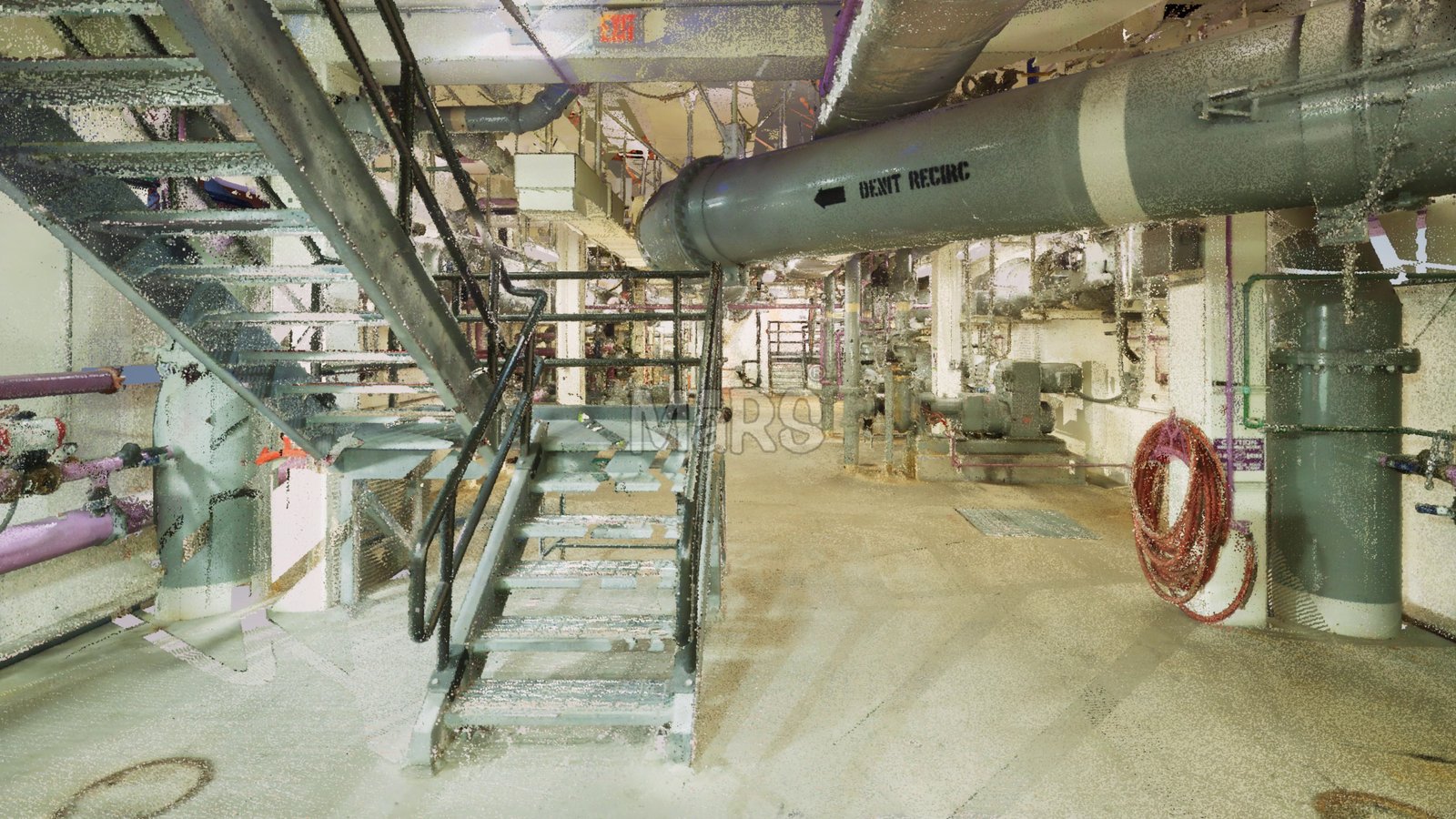
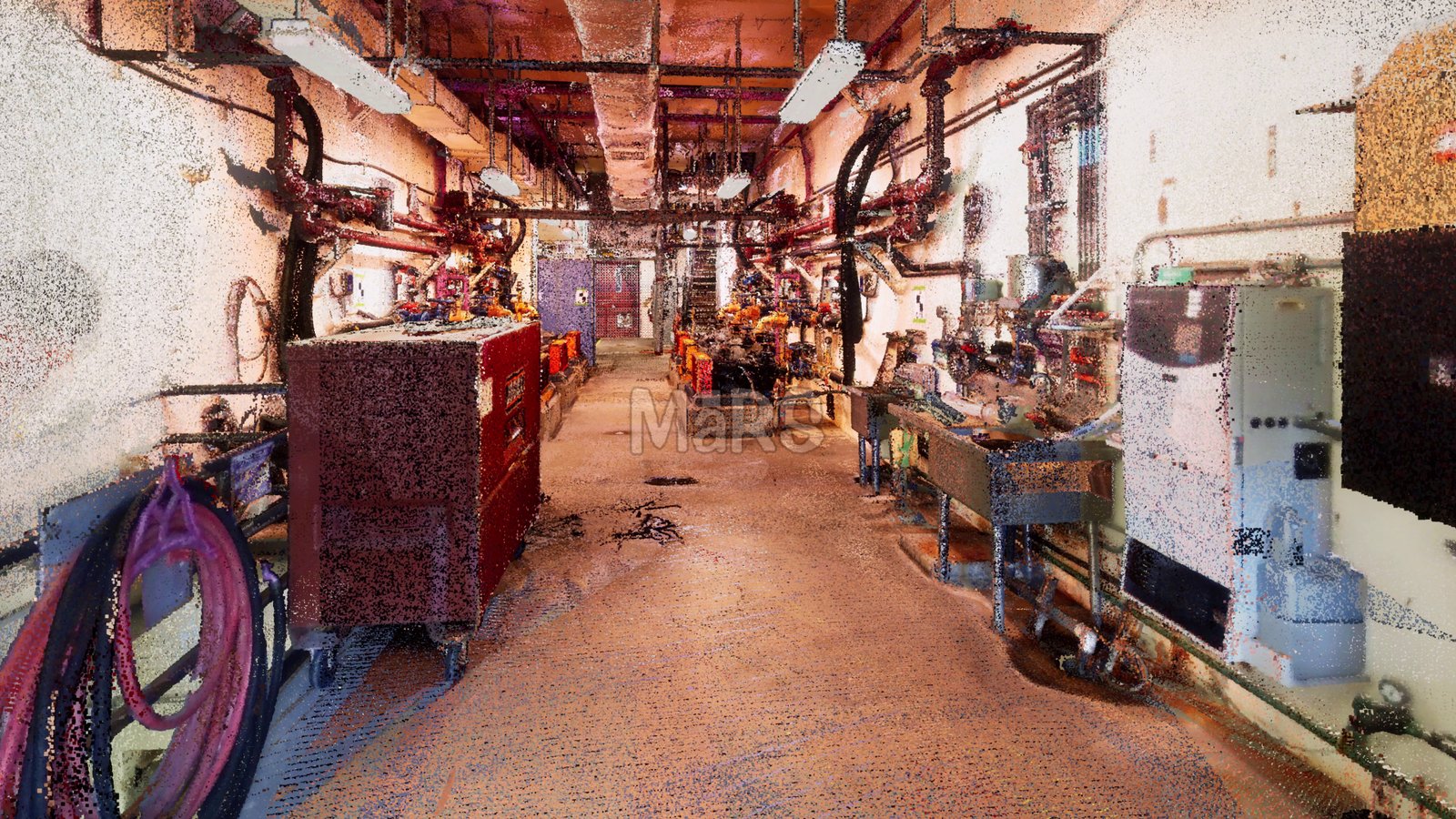
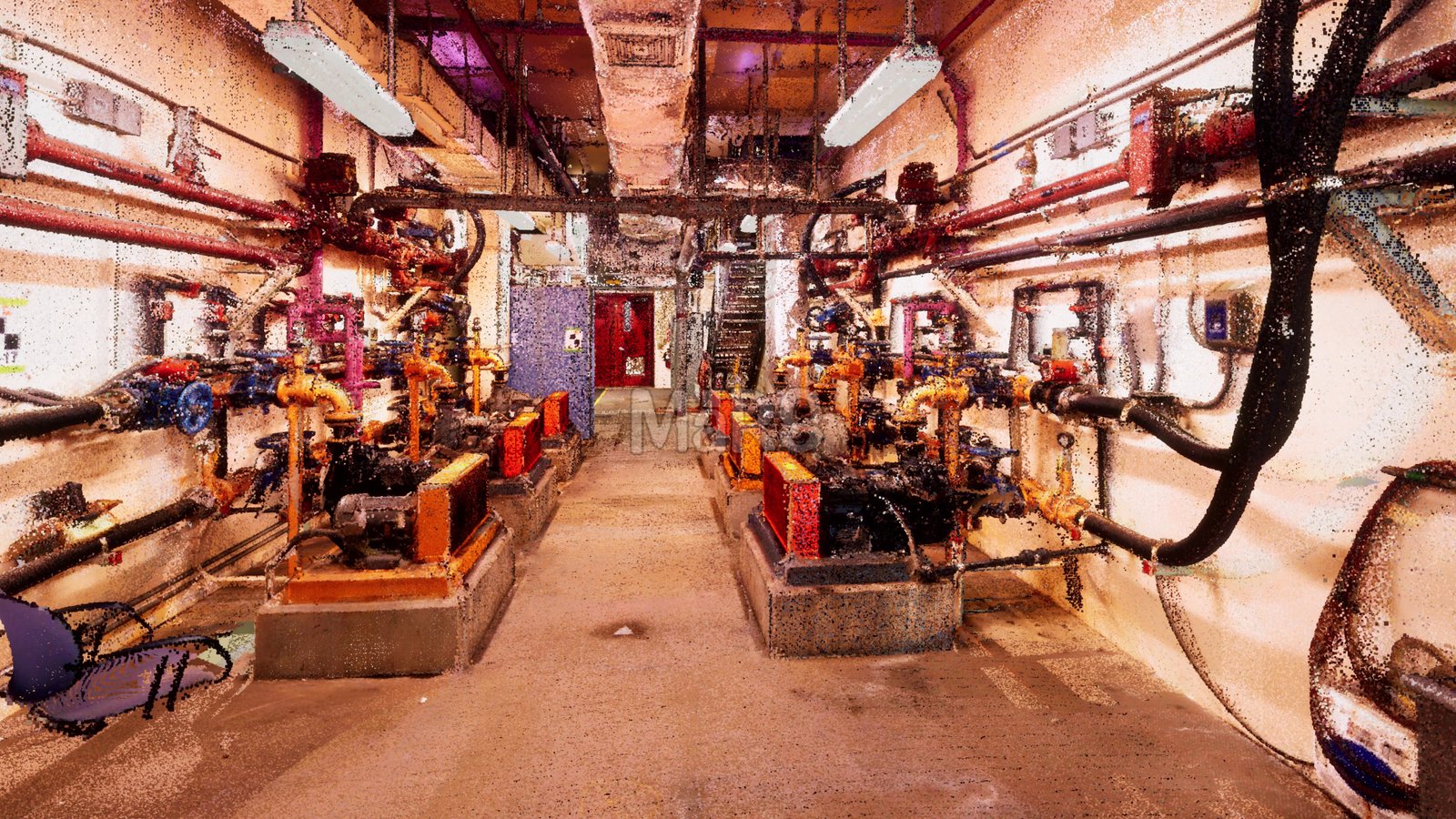
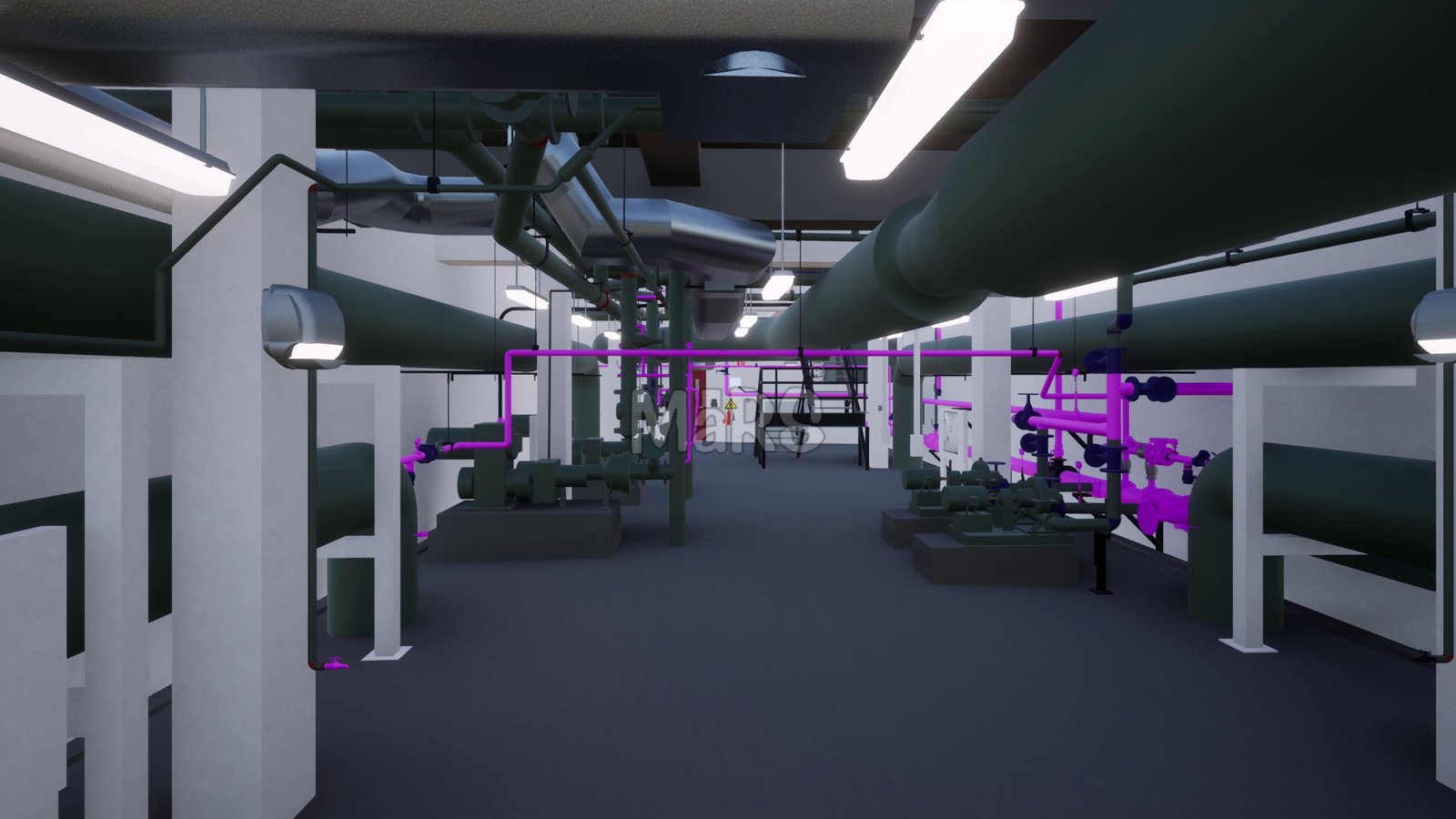
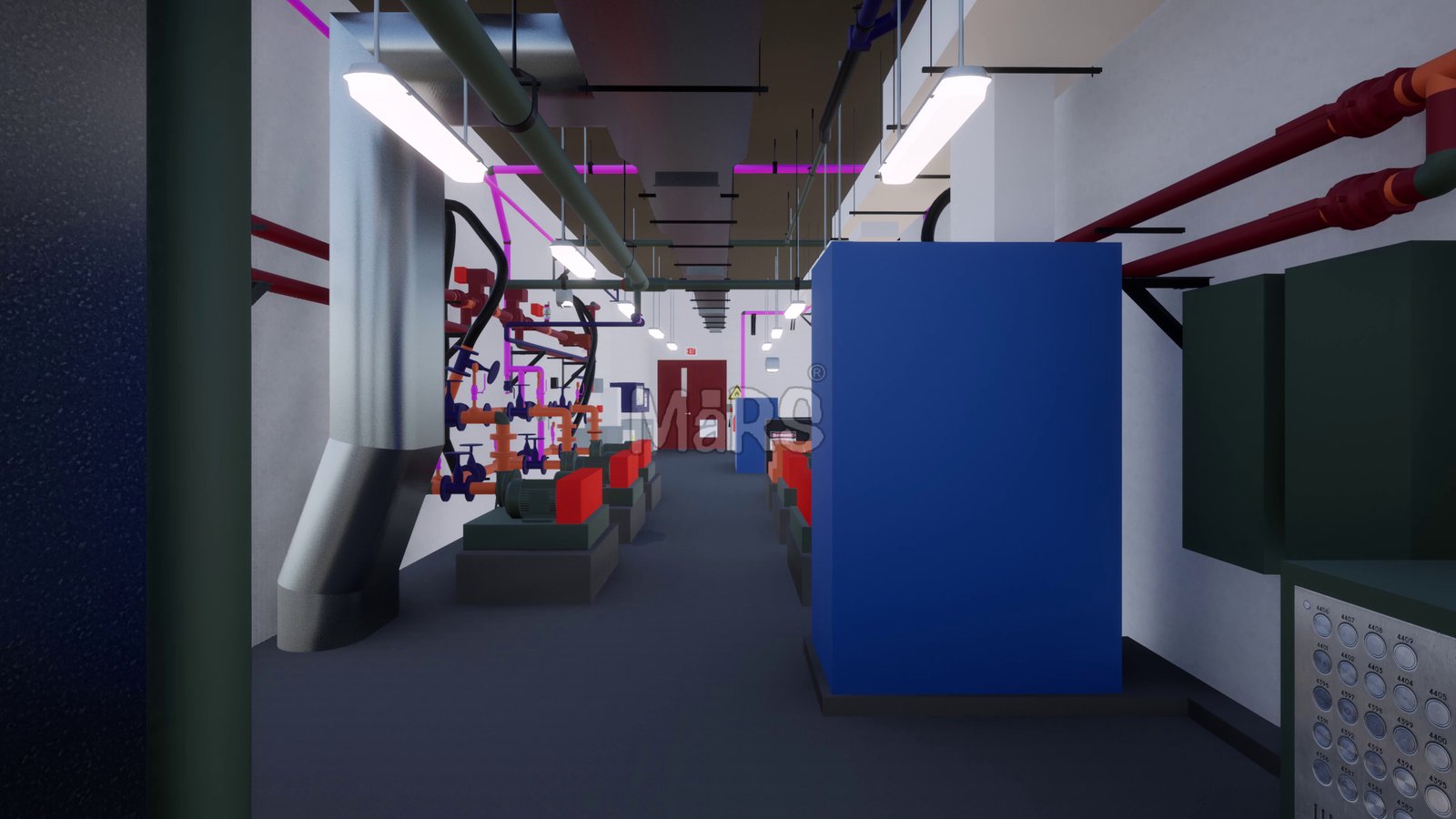
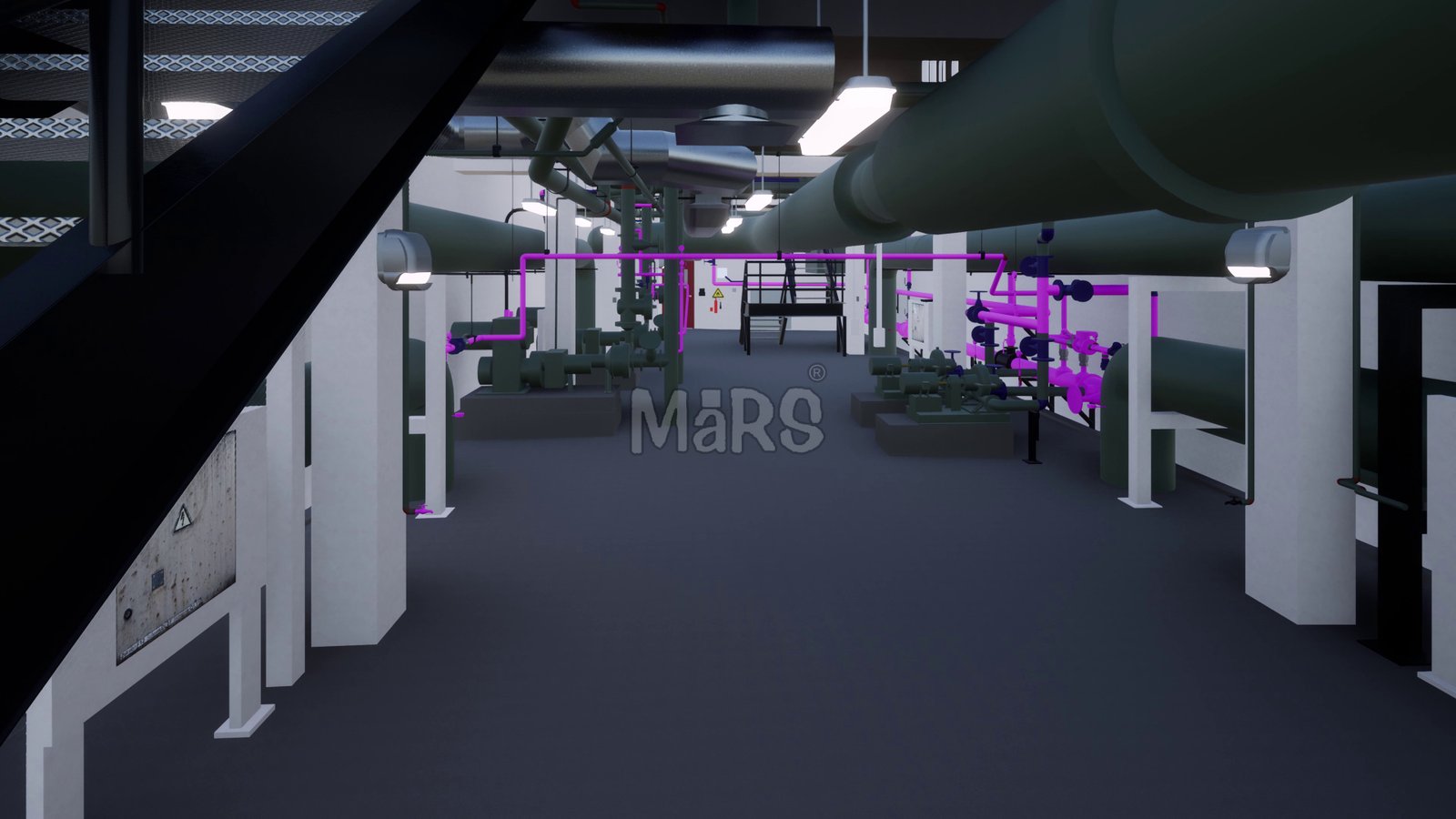
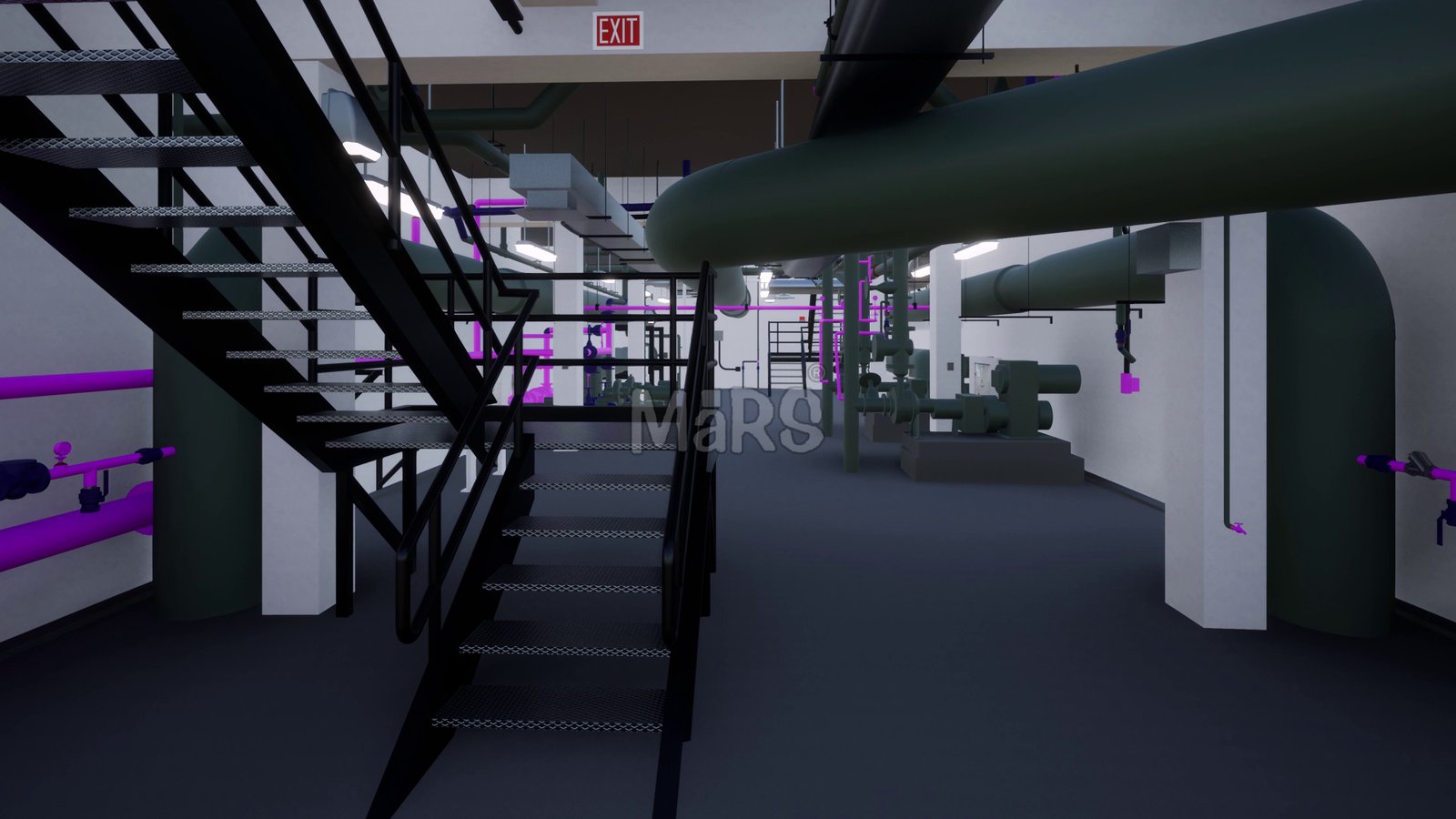
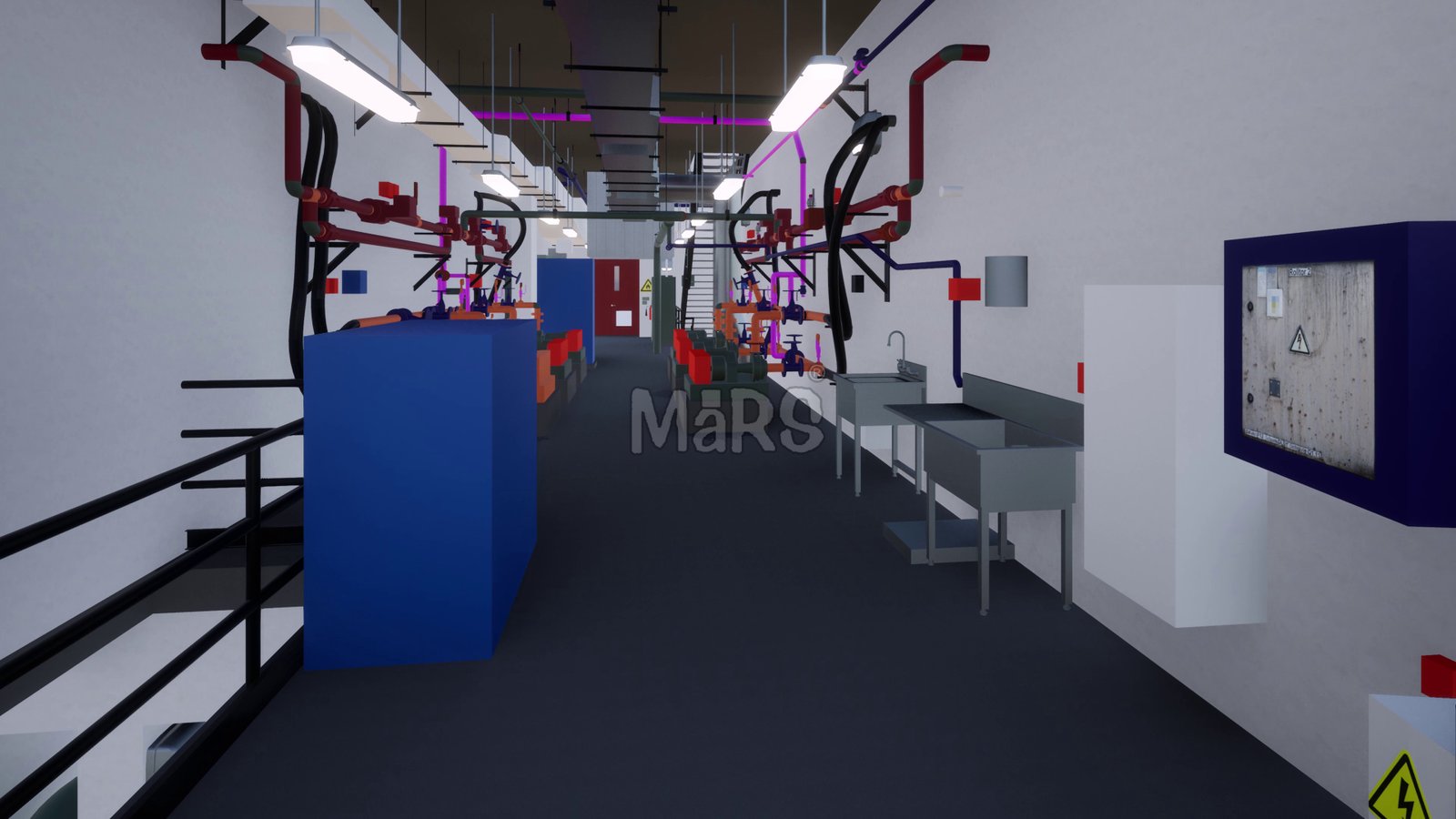
The Advanced Purified Water Facility (APWF) in Nevada is a pioneering water reuse project designed to convert highly treated municipal effluent into a reliable, drought-resilient local water supply. Built at an existing water reclamation site, the facility uses a multi-barrier advanced treatment train — including ozonation, biological activated carbon (BAC) filtration, and ultraviolet (UV) disinfection — to produce very high-quality purified water. The facility is designed to treat approximately 2 million gallons per day, initially supporting irrigation reuse and later enabling indirect potable reuse through groundwater injection and recovery.
Given the density and complexity of the MEP systems required for advanced treatment processes, accurate, coordinated modeling was essential before construction could proceed with confidence.
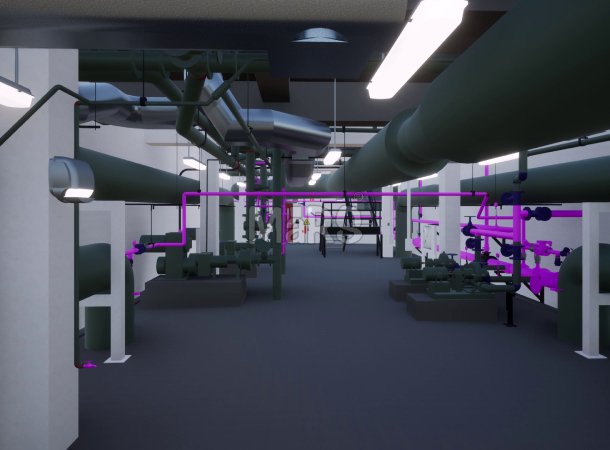
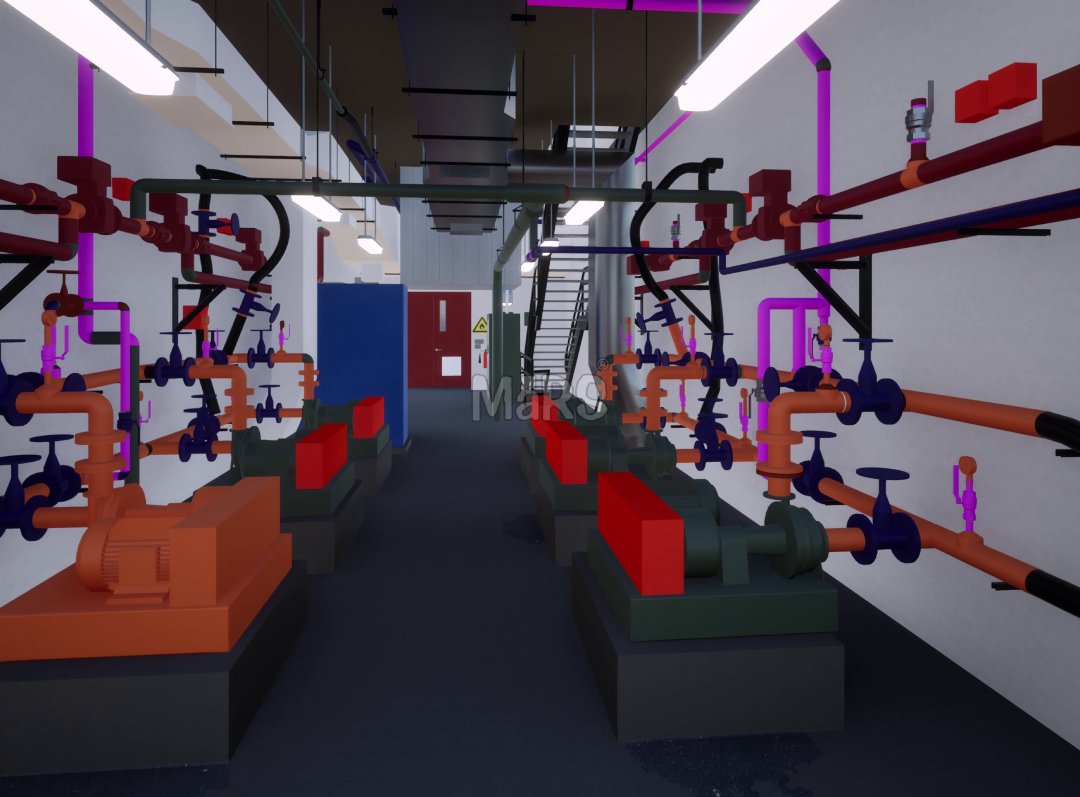
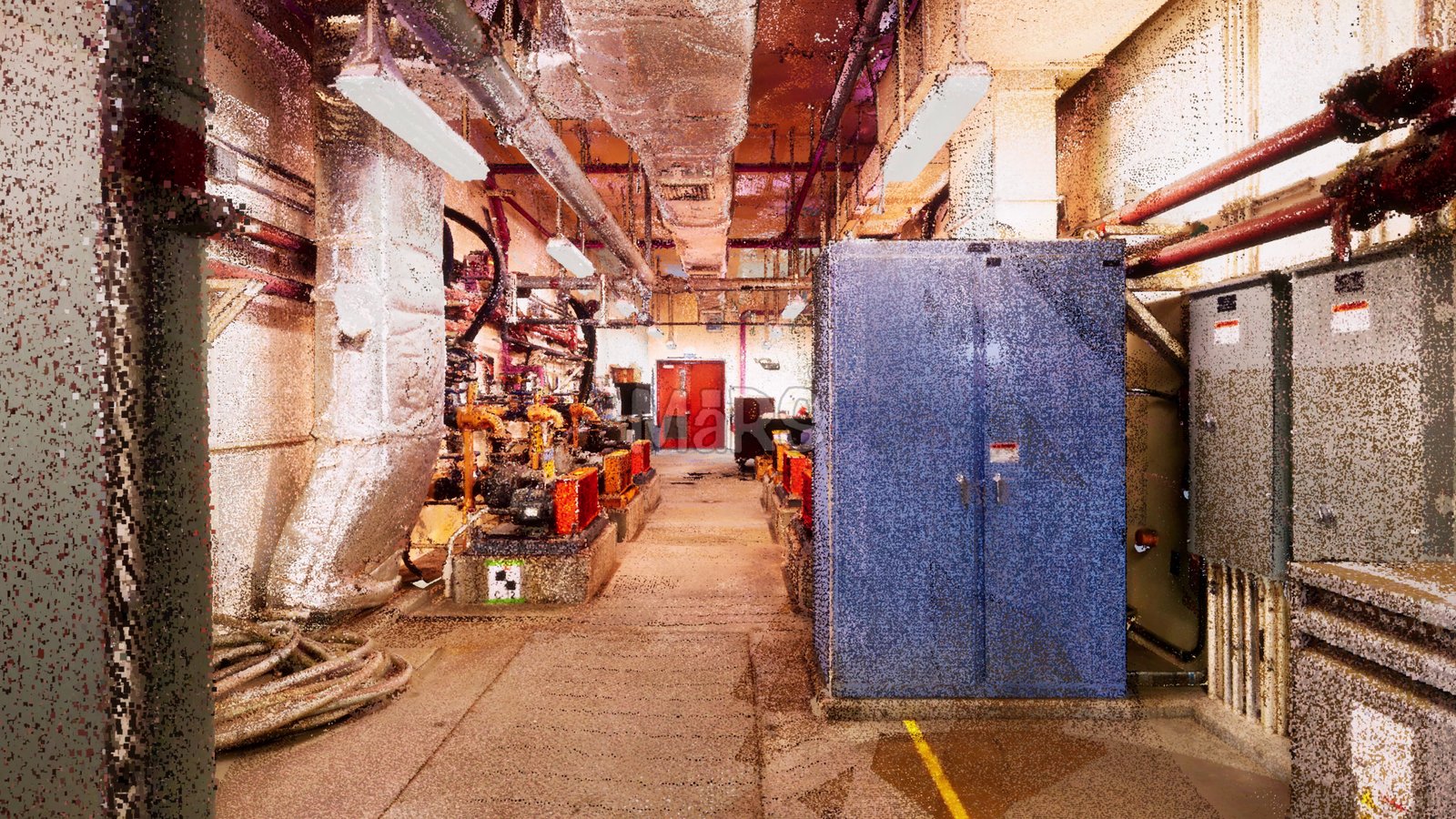
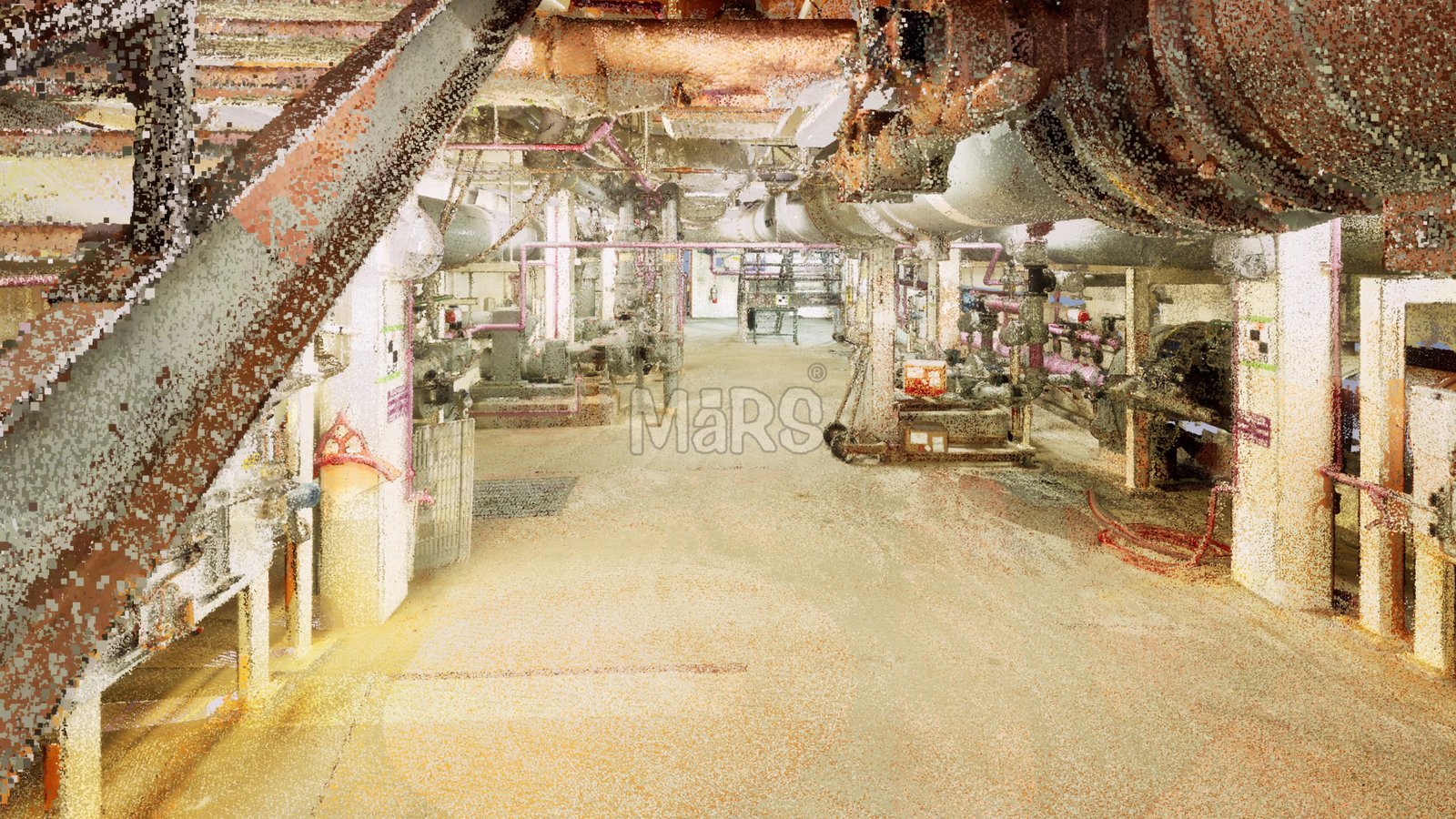
MaRS BIM Solutions was engaged to convert client-provided laser scan point cloud data into a fully coordinated LOD 400 BIM model, delivering detailed MEP modeling and multi-discipline coordination to support clash-free construction of the new treatment infrastructure.
Why This Project Needed BIM?
01
Dense, Multi-System MEP Layouts
Ozonation, BAC filtration, and UV disinfection systems each bring their own process piping, ductwork, electrical, and instrumentation — requiring detailed LOD 400 modeling to capture every component accurately.
02
Retrofit Into an Active Facility
The new treatment train had to tie into an existing, operating reclamation plant, making precise coordination essential to avoid conflicts with live process equipment and piping.
03
High Risk of Field Clashes
With multiple MEP disciplines converging in a constrained footprint, undetected clashes could have led to costly rework and schedule delays during construction.
04
Tight Site Constraints
Fitting new treatment infrastructure within the footprint of an existing site required precise 3D coordination to confirm equipment clearances, access paths, and structural tie-in points.
05
Multi-Discipline Coordination
Structural, mechanical, process piping, and electrical elements all needed to be coordinated together to eliminate conflicts before fabrication and installation.
06
Fabrication-Ready Accuracy
LOD 400 modeling ensured components were detailed to a level suitable for fabrication and installation planning, not just design visualization.
Scope of Work
Scan to BIM Modeling from Client-Provided Point Cloud Data
Coordinated Model Delivery for Construction Support
Visual Highlights
Scan
BIM
Key Challenges
Complex MEP Systems
Coordinating dense, overlapping mechanical, electrical, and process piping systems across ozonation, BAC filtration, and UV disinfection required meticulous LOD 400 detailing to avoid conflicts.
Tight Project Deadline
Delivering a fully coordinated, fabrication-level BIM model within a compressed timeline required efficient modeling workflows and close team coordination.
Working from Client-Supplied Scan Data
Ensuring the point cloud data translated into an accurate, clash-free model required careful validation and close communication with the client's field team.
Coordinating Around an Active Facility
Modeling had to account for existing operational systems, ensuring new MEP elements didn't conflict with equipment that remains in service during construction.
Our Project Execution Strategy
Point Cloud to BIM Conversion
Client-provided laser scan data was processed and converted into an accurate 3D BIM model reflecting true existing conditions.
LOD 400 MEP Modeling
Mechanical, electrical, and process piping systems were modeled in full fabrication-level detail to support downstream construction and installation.
Multi-Discipline Clash Detection
Structural, MEP, and process piping models were coordinated together to identify and resolve clashes before construction began.
Rapid, Deadline-Driven Delivery
A streamlined modeling and QA workflow allowed the team to meet a tight project timeline without compromising model accuracy or coordination quality.
Get In Touch
Let’s Talk About Your Next Project
Share your drawings and project scope. We will review and send a proposal within 24 hours.