

Project Overview
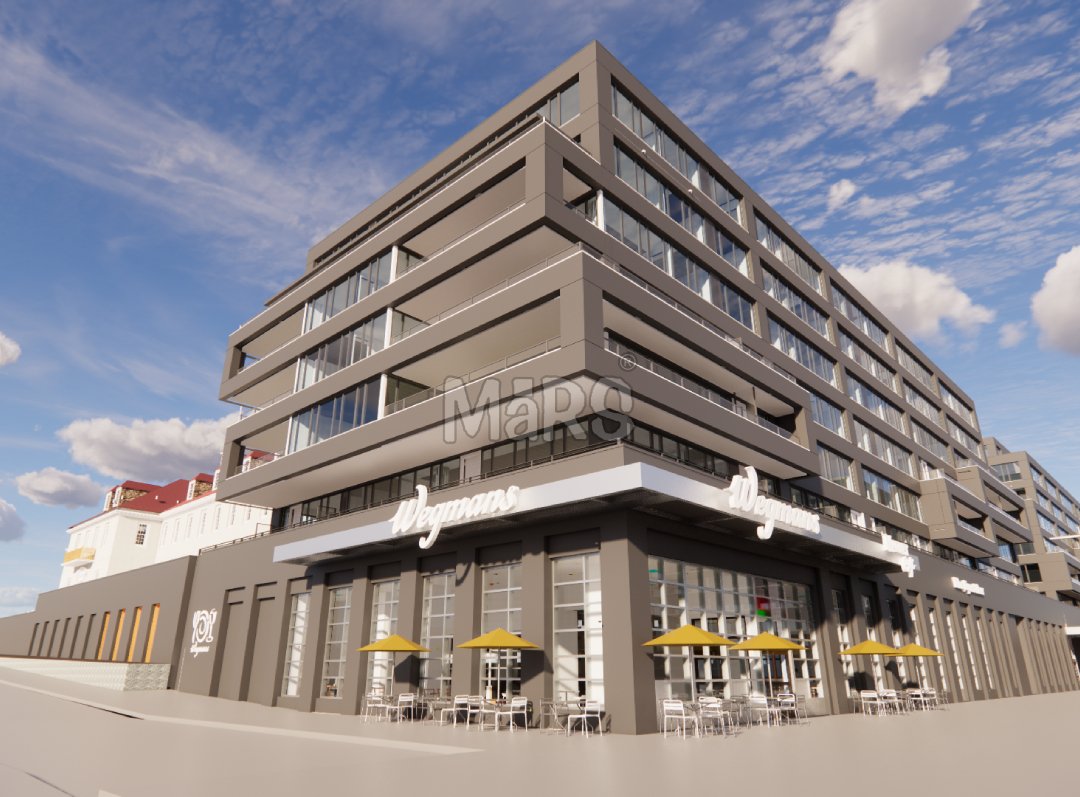
Wegmans at City Ridge is a prominent retail development located along Wisconsin Avenue in Washington, D.C., serving as the anchor tenant of the larger City Ridge mixed-use redevelopment. The project brings a full-format Wegmans Food Market to one of the most high-profile urban infill sites in the region, integrated within a development that also includes residential, office, and community spaces. Given the scale and complexity of the build, LOD 400 BIM was adopted as a core part of the project delivery process to ensure every building system was coordinated and construction-ready before work began on site.
MaRS BIM Solutions was engaged to lead MEP BIM coordination across all building systems, delivering fully coordinated models, clash detection, and fabrication-level shop drawings for the MEP trades. The work covered detailed modeling of mechanical, electrical, and plumbing systems within one of the most MEP-intensive building types in commercial construction. Through structured coordination meetings and multi-discipline clash resolution, the team ensured that every trade entered the field with a clear, conflict-free installation path, supporting an efficient construction schedule and reducing the risk of costly field changes.

Why This Project Needed BIM?
Complex MEP Integration in a Dense Urban Build
A full-format grocery retail environment carries one of the highest MEP densities of any building type. Refrigeration systems, plumbing, electrical distribution, fire protection, and HVAC all converge in tight ceiling and back-of-house zones that leave no room for field conflicts.
Multi-Trade Coordination Across Multiple Disciplines
Mechanical, electrical, and plumbing systems had to be coordinated simultaneously within the same spatial envelope. Without a fully coordinated BIM model, conflicts between these trades would have surfaced in the field, causing costly delays.
Shop Drawing Accuracy Requirements
MEP trade contractors required fabrication-ready shop drawings directly tied to the coordinated model. Any dimensional inaccuracy at the drawing stage would result in prefabricated assemblies that could not be installed without rework.
Coordination Across Multiple Stakeholders
The project involved multiple trade contractors working toward an aggressive schedule. A centralized BIM environment was the only practical method to align all parties, manage changes, and maintain a single source of truth across disciplines.
Scope of Work
Visual Highlights
Portfolio Performance Highlights
Showcasing BIM impact in real projects